
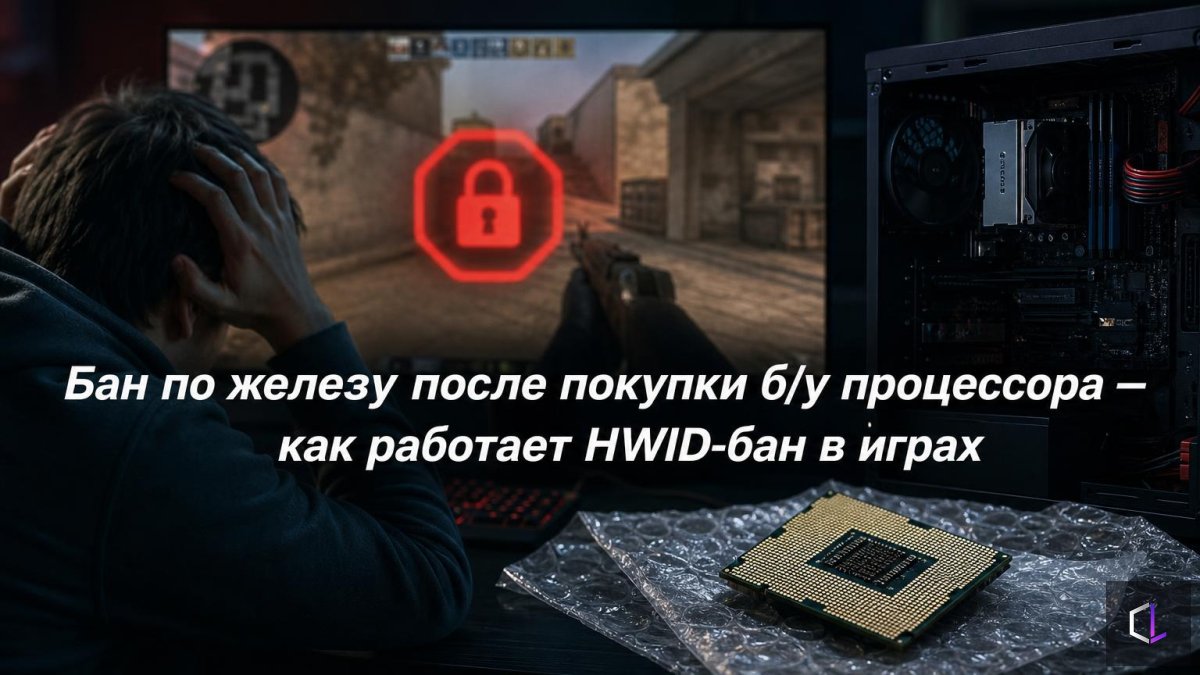
A person bought a used Ryzen 7 5800X3D — a popular gaming processor with extra cache. They installed it, launched Valorant, and ran into game crashes. They contacted Riot support and heard something unexpected: the hardware carries a cheating-related hardware ban from its previous owner. Worse still, the ban reportedly affected not only the processor but also the motherboard and SSD, and it cannot be lifted.
The episode is baffling in itself: the person broke no rules, yet they are the one being punished. But behind it stands a mechanism found in many competitive games, and anyone who buys components anywhere other than a store would do well to understand it.
What a hardware ban is
An ordinary ban is tied to an account: break the rules and you lose the account. Cheaters learned long ago to get around this: they create a new account in a couple of minutes. So developers came up with the HWID ban (from "hardware ID"): the anti-cheat builds a fingerprint of the computer from the serial numbers and characteristics of individual components and blocks access not to a person but to a machine. A new account on "flagged" hardware won't help.
The logic is clear: reoffending becomes more expensive. You have to replace components, not just register a new email address.
Where the logic breaks down
The problem arises when hardware passes to another person. The fingerprint doesn't know who is sitting at the keyboard — it only knows serial numbers. If a component fell under a ban and then went to the secondary market, the new owner gets someone else's punishment as part of the package. According to the story as described, several parts were affected at once — which means the ban relied on more than one identifier.
An important caveat: the details of this case are known only from retellings, and exactly how Riot flags hardware is not publicly disclosed. Developers deliberately keep such details secret, otherwise cheaters would immediately learn to bypass the protection. But the principle of tying bans to hardware is a well-known practice, and the risk to buyers of used components is real.
How to reduce the risk when buying secondhand
There are no guarantees, but caution helps:
- Ask about where the parts came from. If the seller is a gamer whose components are "being sold off in a hurry after an upgrade," that's an ordinary story. If the price is far below market and the explanations are thin, that's a reason to be wary.
- Ask whether there were any bans. An honest seller can tell you whether they had a ban in games with hardware-based protection. A dishonest one will stay silent, but it's worth asking.
- Prefer trusted marketplaces with returns. The ability to return a part within a reasonable period is the main way not to be left alone with the problem.
- Test the game right after installation. Crashes and the anti-cheat refusing to launch within the first few days are a signal to contact the seller before the return period expires.
- Keep the correspondence and the receipt. If you have to prove that you were not involved in the violation, these are your only arguments.
Why this concerns more than just Valorant
Other competitive titles also use hardware bans, and anti-cheat systems are moving toward ever deeper binding to the device. For a player this means one simple thing: components are not just "hardware" but part of your gaming identity. When selling your computer or individual parts, remember that a clean device history is also part of its value.
The question of fairness remains too: a system that reliably stops cheaters sometimes catches honest people, and, judging by this story, there is no simple appeal mechanism for such cases. Until one appears, the most reliable protection is to buy where you can return the goods, and not to skimp on vetting the seller.


