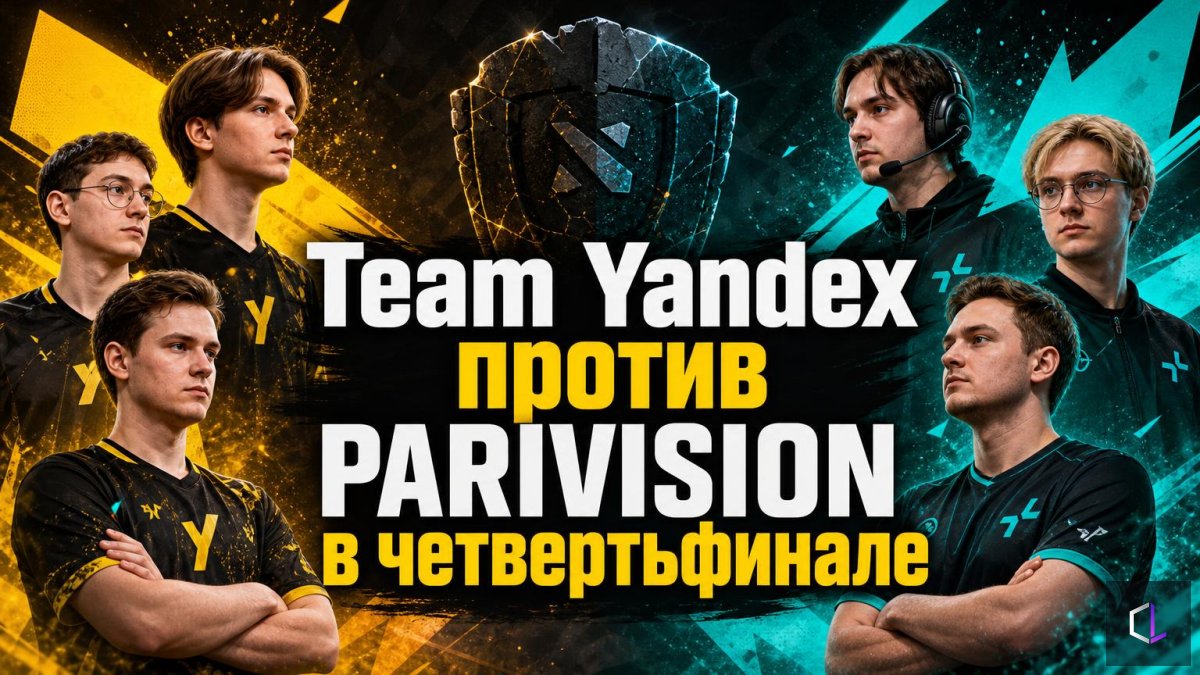
The first game day of 1win Essence III for Dota 2 passed without surprises. PARIVISION beat DOKONCA 2:0, Aurora Gaming was just as confident against GamerLegion, and Team Spirit closed out their series against 1w Team, also 2:0. The favorites did their job, and the intrigue moved to the second day: YeS, with Kazakhstani player aik, and Froglinks, with xsvampire, will meet the strongest teams in the world at the moment, PARIVISION and Team Spirit, for the first time.
There is no magic formula for such series, but there is a logic that underdogs use at every level. It is worth examining, because almost every major tournament bracket has pairings where the outcome seems "clear" before the start.
Why a 2:0 Score Does Not Always Mean a Difference in Class
A series to two wins (BO3, from the English "best of three") is structured so that the favorite wins it more often than any single map. One map is one draft, one early timing, one contested fight. The favorite only needs not to make a mistake twice, while the underdog needs to win two maps against an opponent who reads the game better and exposes themselves less often.
That is why a 2:0 score often says not "a tenfold difference" but "the team won the two episodes that decided the map." The weaker side usually does not lose across the board; it loses several key stretches in a row.
The First Map as Reconnaissance, Not as the Goal
Favorites arrive at a series counting on several prepared strategies. It benefits the underdog if those preparations are revealed on the first map and fail to work on the second and third. Hence two working principles:
- do not show everything you have in reserve on the first map: if the team wins it, the opponent will rework their plan, and if it loses, it still has a stock of surprises left;
- write down exactly how the map was lost: not "they are stronger," but "lost the lane in the third minute" or "failed to gather in time for the first Roshan." This gives a concrete fix for the next map.
Drafting Against a Favorite: Play Your Own Game, Not a Mirror
A typical mistake of an underdog team is to pick what the opponent likes and try to outplay them on their own ground. The one who knows the heroes better wins there, and that is almost always the favorite. It is more useful for the underdog to choose a style in which its strengths are above average: coordination, fast tempo, non-standard timings.
The reverse rule also works: do not pick something too original if it has not been rehearsed. A hero the team has never played in a series looks like a bold move, but in practice turns into five mistakes in the first fight.
Psychology: How Not to Break Down After the Second Setback
A player who, after losing the first map, tells themselves "they are too strong" is effectively giving away the series. It is known that even at the top-scene level, players doubt their own play after a lost series: after the match against Team Spirit, one of the 1w Team members admitted that he did not like how he was playing at all and that the opponent seemed too strong. Such a state is understandable, but it is also dangerous: a series in which a team has already admitted the opponent's superiority internally is usually decided at an early stage.
A working replacement is to divide the series into short tasks. First goal: survive to the fifteenth minute without a hole in the economy. Second: do not give up the first Roshan without a fight. Third: win one team fight in which the favorite made a mistake. The big goal of "beating Spirit" is broken into what can be done by hand in the next few minutes.
What Is at Stake for YeS and Froglinks
For YeS and Froglinks, who have players from Kazakhstan in their rosters, the meeting with PARIVISION and Team Spirit is a chance to show the scene what they are worth. Even a 0:2 loss in such a series gives the players what regional tournaments do not: experience against the tempo and decisions of the world's strongest teams. That is why these matches should be watched not only for the final score but also for the minute at which, and the decision because of which, the map starts to slip away.
It is precisely there, in individual episodes (choosing the moment for a fight, spending key abilities, reacting to a change of tempo), that the real difference between levels is visible. It can be seen even in a 0:2 series, if you follow the decisions rather than the scoreboard.