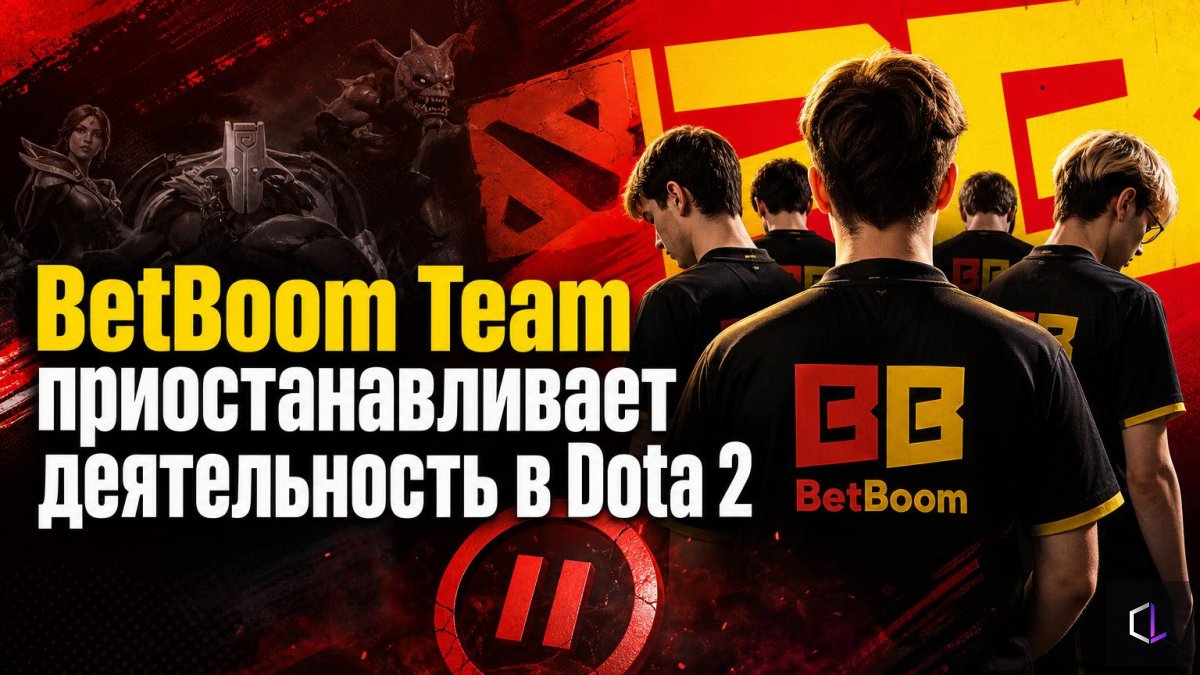
BetBoom Team is suspending its operations in Dota 2. The club published the official announcement on its social media. This is a notable event for the entire discipline: BetBoom Team was among the most recognizable Russian organizations in Dota 2 and regularly appeared at major tournaments.
What "suspension" means
The wording matters here. The club is not talking about shutting down the organization or leaving esports entirely, but specifically about suspending operations in a single discipline. In practice, this means the team will temporarily not compete, and the players and coaching staff are released from their obligations to the roster. The future of the division remains with the club: the suspension leaves open the possibility of a return, but the announcement gives no timeline for it.
For organizations, such a step is not unusual. An esports club lives on sponsorship money and tournament payouts, and disciplines with an expensive roster and a dense calendar require a stable budget. When the numbers stop adding up, an organization most often winds down just one division and keeps the others.
Why the club's exit is noticeable across the whole scene
Dota 2 rests on a few dozen organizations that maintain professional rosters, pay salaries and cover participation in qualifiers. Each such club means jobs for the five main-roster players, substitutes, coaches and analysts. An organization's exit reduces the number of places in the professional league, and competition for the remaining slots grows.
The player market follows. When a roster is released, strong free agents appear on the transfer market all at once. Other clubs get the chance to strengthen without buying out contracts, but the players themselves have to find a new team on a tight schedule: transfer windows in Dota 2 are tied to the tournament season, and a roster without a team risks missing qualifiers.
How a free agent's path works
Released players will have to choose between several scenarios:
- move to another organization as a full roster, if the players have built chemistry and are ready to keep the group together;
- go their separate ways to different clubs, filling missing roles in other teams;
- assemble their own team and play qualifiers under a neutral name or under the banner of a new sponsor;
- take a break and return to competitive play next season.
For viewers, this means that familiar rosters may change beyond recognition in the coming months: strong players will head in different directions, and familiar hero combinations and play styles will shift along with them.
What viewers will notice
The exit of a major organization always affects the tournament picture. Qualifiers lose one of the favorites, and the bracket gets a gap that another team will fill. For fans, it is also a matter of attachment: clubs with a long history build their own audience, and a suspension takes that audience out of the competitive field.
There is also the question of how sponsors will behave. Brands that invested in Dota 2 through a specific organization will look for a new platform, and how quickly the released players find work depends largely on where that money goes. It is worth following this through the official channels of the club and the players: that is where the first news about the roster's future and the organization's possible return to the discipline will appear.