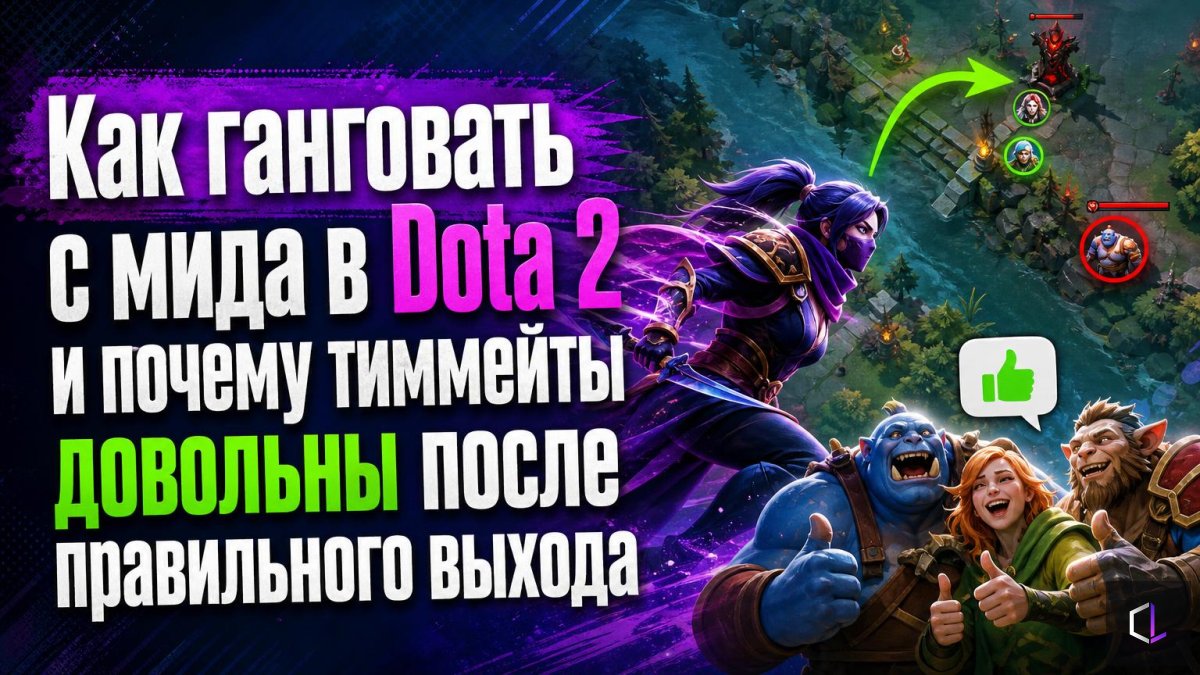
The mid laner in Dota 2 is the only player whose lane is in the center of the map. From their position, the path to both side lanes and jungle areas is shorter than for any other hero. That is exactly why a gank, that is, a joint attack by several heroes on a single enemy player, from mid is faster and more unexpected than from the flanks. But a short rotation doesn't mean it is always worth it.
When should a mid laner leave the lane?
The basic rule is simple: it makes sense to leave when the payoff from a kill or from pressure on the side lane is greater than the loss you take in the mid lane. The losses add up from missed creeps (experience and gold that go to the enemy mid laner), a missed rune, and the risk that the enemy mid laner will come back with tempo and push the tower.
A practical guideline is three questions before rotating:
1. Do you have an ability available? A gank without control or burst turns into a stroll: the target will simply fall back to the tower.
2. Does the target know you are coming? If the enemy hero sees you on the minimap and is already retreating, you can cancel the rotation without any loss.
3. What is your mid opponent doing? If he has no rune and has left the creeps, there is no need to go: you lose more than he does.
What should you do before rotating?
A good gank starts back in the lane. First, it is worth leaving the creeps in a position where the wave won't slip under the enemy tower while you are away. Then, get in touch with your teammate in the side lane ahead of time: tell them you are coming and wait for confirmation. Rotating without a warning often ends with the ally falling back under the tower right at the moment you appear.
A good habit is to use a teleport scroll or a haste rune, if you have one, so as not to lose seconds on the way. But the scroll needs to be spent wisely: you won't have enough for every gank.
How do you keep your tempo after a gank?
The main risk is returning to the lane when a wave of creeps has already piled up under your tower and the enemy mid laner has gotten free experience. If the gank fails, it is better to return right away rather than continue the chase. If it succeeds, don't forget to pick up the creeps on the way back and check the rune right away: after a rotation, a new one often appears at exactly this moment.
An extra tip: after a successful kill, take an objective first (a tower, a jungle camp, a rune) rather than chasing the next frag. The team's advantage grows from material gains, not from a nice-looking score.
What distinguishes a good gank from a bad one?
The difference most often lies in preparation. A good rotation looks like a coordinated action by three players who share a common picture of what is going on. A bad one looks like the impulse of a single hero who decided that the moment had come. The first option brings a kill and development, the second brings a lost lane and an irritated team.
If the mid laner gets a phrase like "thanks, mid" from teammates, it means the gank went through without unnecessary losses: the ally was not left alone against two, and the team gained an advantage. So you should be guided not by the speed of the rotation, but by what you leave behind you.