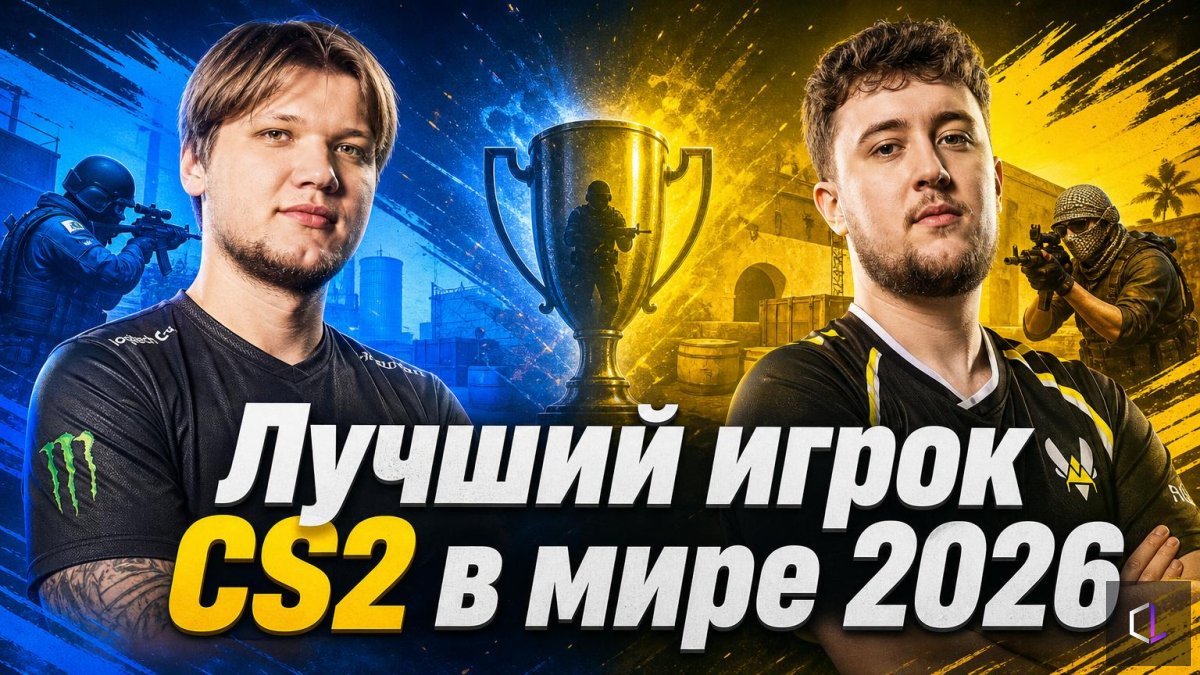
The question "who is the best player in the world in CS2" sounds simple, but there is no honest one-name answer to it. The reason is not evasiveness, but that everyone understands the word "best" differently. Some consider the best player the one with the highest stats. Others — the one who wins finals more often. Still others — the one without whom the team falls apart. These three criteria rarely point to the same person.
Two Schools of Evaluation
The first approach is numbers. The main one is rating: an overall metric that aggregators like HLTV derive from kills, deaths, damage, and contribution to the round. It is convenient because it reduces a performance to a single number and allows players to be compared across tournaments. Whoever consistently stays at the top of this table gets the "best" label.
The second approach is results. Here the focus is not on how prettily the frags were racked up, but on how many titles the player has won, how they played on deciding maps, and whether they carried the team when everything was going badly. This approach values "clutches" — situations where a player single-handedly wins a round against several opponents.
The two approaches have one thing in common: both try to measure impact on the outcome of the game. The difference is that rating records everything, while titles record only what made it to the final.
Where the Approaches Diverge
The classic example of the debate is a comparison of two different types of leader. One player is a "star-arsenal" who takes the most spectacular rounds and wins duels beautifully. The other is the team's steady "engine," who has fewer flashy moments but a higher average contribution to every round.
By rating, the second is more often ahead: consistency accumulates in the average. In fans' memory, the first more often wins: vivid episodes are remembered more strongly than steady play. That is why the "who is better" debate is often really a debate about what we value — peak moments or consistent quality.
There is also a third factor: role. A sniper who opens the round with the first shot and a support player who throws grenades and covers the flank physically cannot have the same kill stats. Comparing them by a single rating is like comparing a striker and a goalkeeper by the number of goals.
Why There Will Be No Single Answer
The CS2 meta changes quickly: updates to maps, economy, and weapons shift which qualities provide an advantage. A player who dominated one season may give way in the next to someone whose style fits the new conditions better. That is why any "best" list is a snapshot of a specific period, not an eternal title.
This leads to a practical way of reading such debates. Before agreeing with someone's pick, ask what criterion it was based on: rating, titles, impact on the team, or personal impressions. If the criterion is not named, the debate is meaningless — the sides are simply talking about different things.
If you need a compact guideline, evaluate a player with three questions:
- does he maintain a high rating throughout a season, not just one tournament;
- does he win the deciding maps in the playoffs;
- what happens to the team when he plays below his level.
A player who answers all three confidently is the strongest candidate for the title of best — but even then it is a conclusion for a specific moment, not forever. Watch how the numbers and results change at the upcoming major tournaments: they will show who holds on to the lead.