One day — two different views on the future of CS2
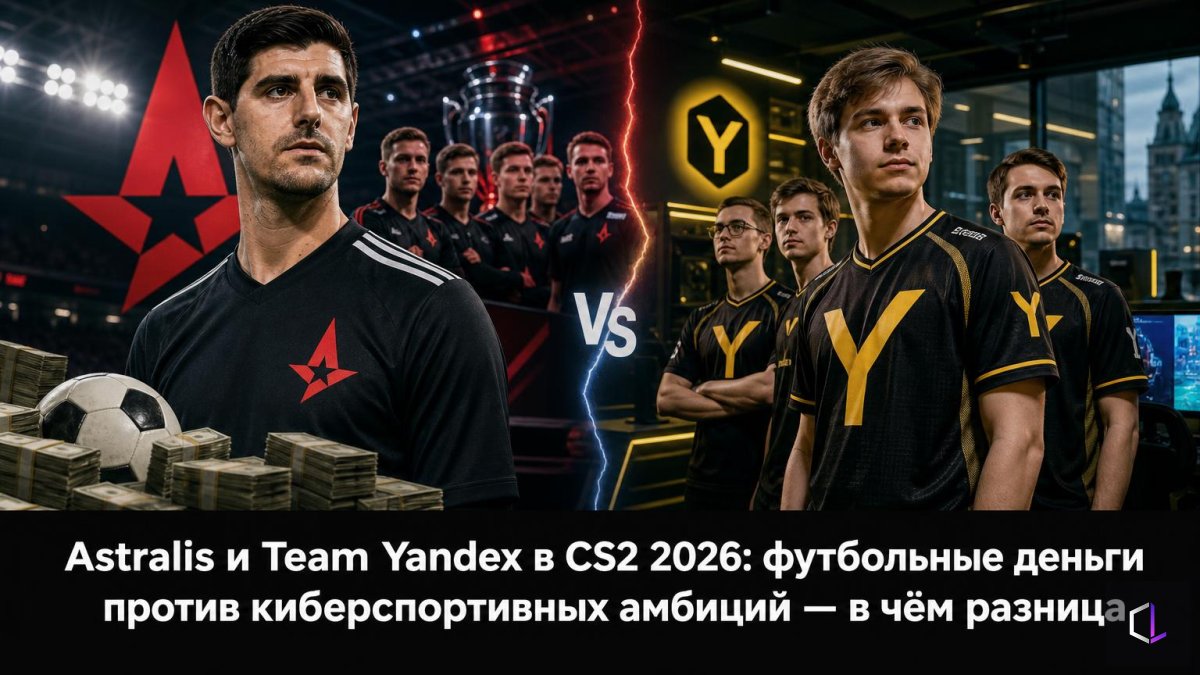
On September 29, 2026, a rare coincidence occurred in esports news: almost simultaneously, two stories surfaced about big money entering CS2. Real Madrid goalkeeper Thibaut Courtois, together with Gonzalo Vila, became an investor in Astralis — the legendary Danish organization that has now come under the management of NXTPLAY. At the same time, Team Yandex CEO Vladislav Kuzmenko publicly admitted that creating a CS2 roster remains his personal dream, but it requires far more investment than the already existing Dota 2 academy.
At first glance — just two news items in the same feed. In reality — two different scenarios of how organizations enter esports, and it's worth breaking down how they differ.
A ready-made story vs. a blank slate
Astralis is a brand with history: majors, legendary rosters, a recognizable name. Courtois' arrival here isn't a start from scratch, but an investment in an already-functioning structure that has an audience, a legacy, and a clear business model. This kind of entry reduces risk: the money goes into an organization that knows how esports works from the inside, has contracts, management, and market reputation.
Team Yandex is the opposite situation. The company is already building a Dota 2 academy and is essentially learning esports "in real time" — gaining experience, as the CEO himself put it. The desire to launch a CS2 roster isn't held back by a lack of interest, but by the scale of investment required: the CS2 market involves fierce competition for players, coaches, analysts, and media presence, and it will cost noticeably more than building a similar project in Dota 2.
What this means for those following esports in the post-Soviet space
Both cases are, in fact, about the same thing: the interest of major brands and public figures in esports continues to grow, but there are very different ways to enter it.
- Through a ready-made structure. Buying a stake in a well-known organization is faster and more predictable, but depends on someone else's history and reputation.
- Through organic growth. Building a roster from scratch takes longer and costs more, but the result belongs entirely to the one who built it.
For parents and teenagers following this kind of news, it's important to understand: neither of these paths replaces the main thing — the player himself must be ready for the level the organization is aiming for. An investor can bring money and media presence, but cannot "buy" the skill of a specific player on the roster. And a CEO who dreams of a CS2 team will still run into the question — who to recruit if there are no trained players of their own yet.
Money arrives faster than players
That's exactly why news like Courtois joining Astralis or statements about Team Yandex's plans are interesting not just as a transfer or investment fact. They show that infrastructure and capital in esports are now growing faster than players of the required level are being developed. Demand for trained, disciplined athletes will only increase — which means that those starting their journey in CS2 now would do well to approach it systematically, rather than relying on luck or a media wave.