Complexity Shuts Down in CS2 2026: Why Even Legacy Brands Can't Survive Without Stability
When a big name stops being a guarantee
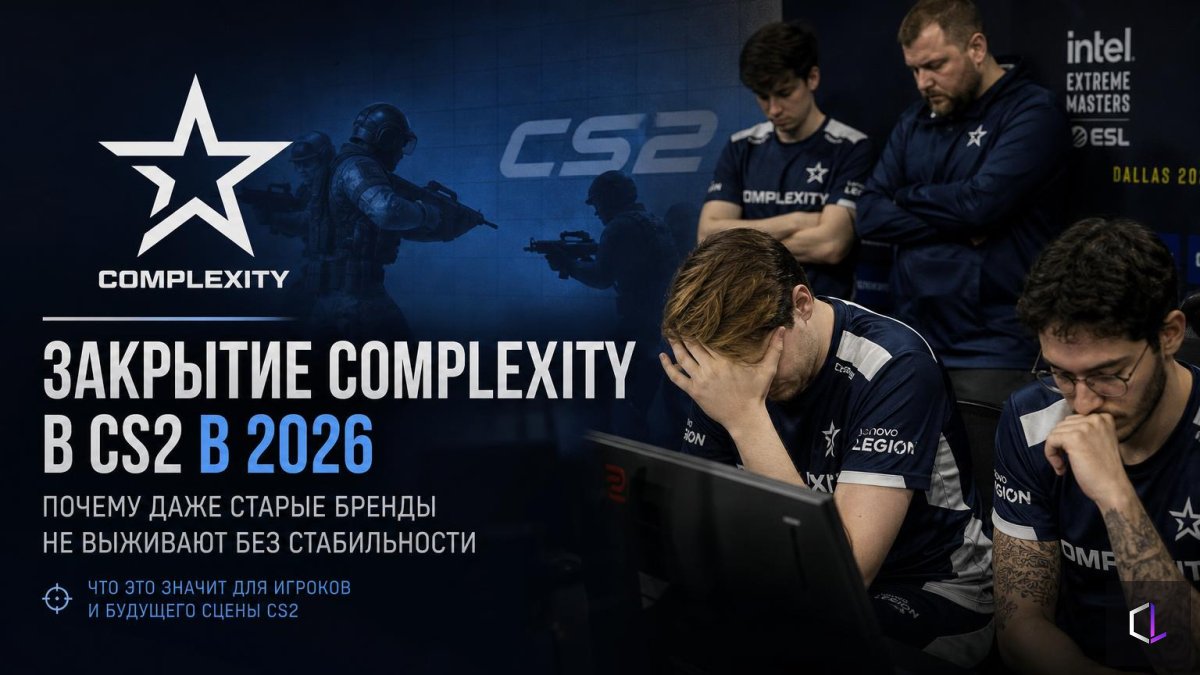
Complexity — one of the oldest brands in esports history, having gone through dozens of rosters and transfer windows — has announced the shutdown of its CS2 division. According to founder Jason Lake, the decision was made consciously: it's better to close the project now than to slowly drive it into debt and reputational collapse, as has happened with other teams. Notably, the CS2 roster existed for only 13 months — by esports standards, this is a very short cycle for an organization with such a name and history.
This isn't an isolated case amid the industry's overall turbulence: in parallel, the story of Passion UA continues to surface, whose former roster, according to public statements, is owed substantial sums by the team — over $500,000, including money from Budapest Major stickers. Both cases share one thing in common: behind a brand's attractive facade, financial stability isn't always guaranteed.
Why this is happening right now
CS2 continues to grow as a discipline — tournaments like BLAST SLAM are drawing attention, prize pools at regional championships (including large-scale projects like the Sber tournament with a 15 million ruble prize pool) are increasing, and viewership isn't declining. But the growth of the discipline and the financial stability of a specific organization are different things. Maintaining a pro roster requires constant investment: player salaries, bootcamps, coaching staff, logistics for LAN finals. If an organization lacks diversified revenue sources — sponsors, merchandise, media projects — it remains vulnerable even with a strong roster.
Lake's decision to shut down the company rather than drag it toward bankruptcy can actually be called a rare example of a responsible approach. Unlike the Passion UA situation, where it was the players who suffered, this is a preventive step — the organization isn't allowing the situation to escalate into debts owed to the roster.
What this means for players and parents
For those considering esports as a serious career path for a child or teenager, both cases are an important lesson. The professional scene isn't just about skill and rating — it's also about economics. A player, even at the top level, depends on the financial health of the organization they play for. The Passion UA debt situation shows that a contract and a team's big name don't automatically protect against non-payment.
That's exactly why it's important for future professionals to understand the industry's context even at the learning stage — how contracts, prize pools, and sponsorship schemes work, and why an organization's stability sometimes matters more than momentary tournament success.
Conclusion
Complexity's shutdown isn't a tragedy or a sensation — it's rather an indicator of the industry's maturity: organizations are increasingly choosing to close honestly rather than sink into a debt pit. But parallel stories like Passion UA remind us that the risks for players remain real, and they need to be understood in advance, not after the fact.