A salary gap that surprises even experienced players
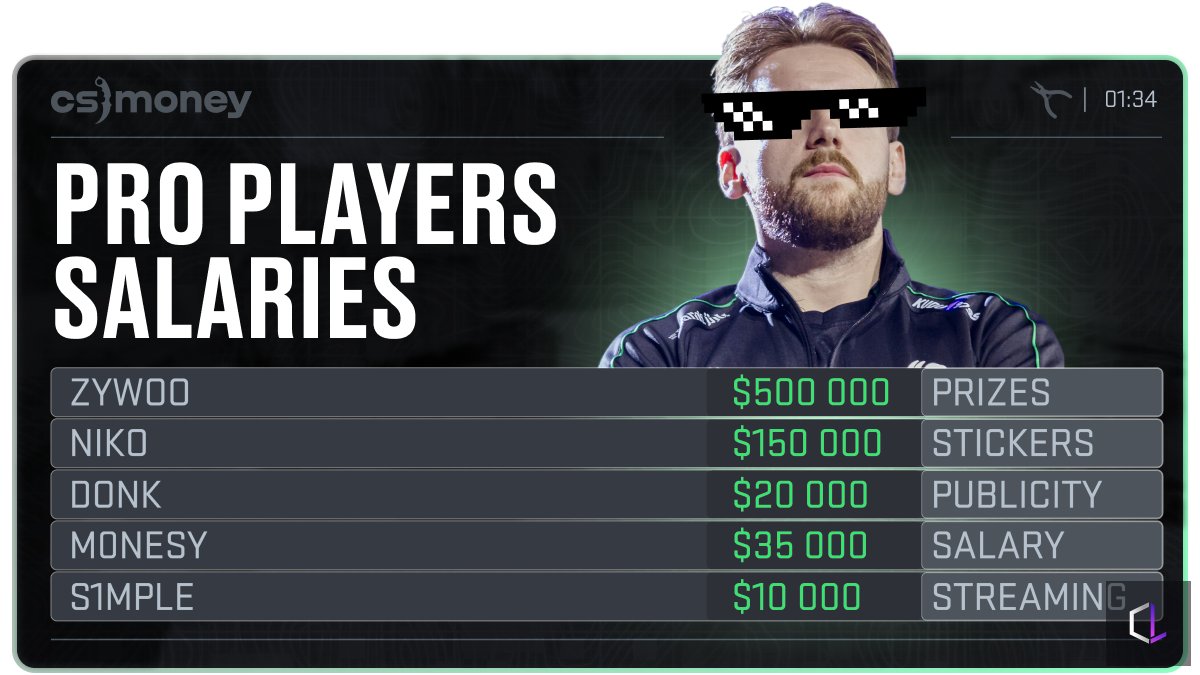
The esports community was once again discussing top CS2 players' contracts the other day — and the numbers make not only fans but also parents of young gamers stop and think. The talk was about one of the scene's most decorated snipers receiving more than 100 thousand euros a month under a new long-term contract, while players from another top team with equally impressive results earn noticeably less — and this despite both teams regularly competing for top places.
For those who don't follow esports every day, this might sound strange: how can the level of play be comparable while the income isn't? But once you look into it, everything makes sense and is well familiar to anyone who follows the transfer market in any sport or entertainment industry.
Why salary isn't just about skill
A professional player's earnings are made up of far more than just tournament prize money. The main part of the income consists of:
- the base contract from the organization, which depends on the team's budget and its sponsorship deals;
- the player's personal brand — follower count, recognizability, charisma, streams;
- the length and stability of results — teams are willing to pay more for predictability and loyalty for years ahead;
- market competition — if several organizations want to sign the same player, the price naturally goes up.
This is exactly why organizations with larger sponsorship deals and a presence in the international market can pay their stars several times more than teams that rely primarily on sporting results rather than media presence.
What this means for future pro players
For teenagers who are seriously thinking about a career in esports, this example is a great opportunity to understand an important thing: a high level of play is an entry ticket, not a guarantee of high income. At the top of the rankings, competition is enormous, and that's where things start to matter that are rarely discussed during aim and tactics training:
- the ability to work with your audience and social media;
- English — without it, it's hard to get into top international lineups;
- media stability — it's important for organizations that a player doesn't create reputational risks;
- understanding contracts and working with agents — this also needs to be learned separately.
A view from the academy
At CyberLab, we always tell our students and their parents: the path into esports isn't just about in-game hours. A kid who trains their mechanics and tactical thinking is certainly on the right track, but competitive advantages at the very top of the industry are built more broadly — through discipline, communication, and the ability to build oneself as a personal brand.
That's why, alongside purely game-focused modules, our programs include blocks that help teenagers look at esports as a profession: breaking down teamwork, the basics of public speaking, and understanding how the industry works from the inside — from contracts to sponsorship deals. The salary gap between stars of the same level is a good reason to discuss this with your child at home: talent opens doors, but what happens after that is a whole different game.