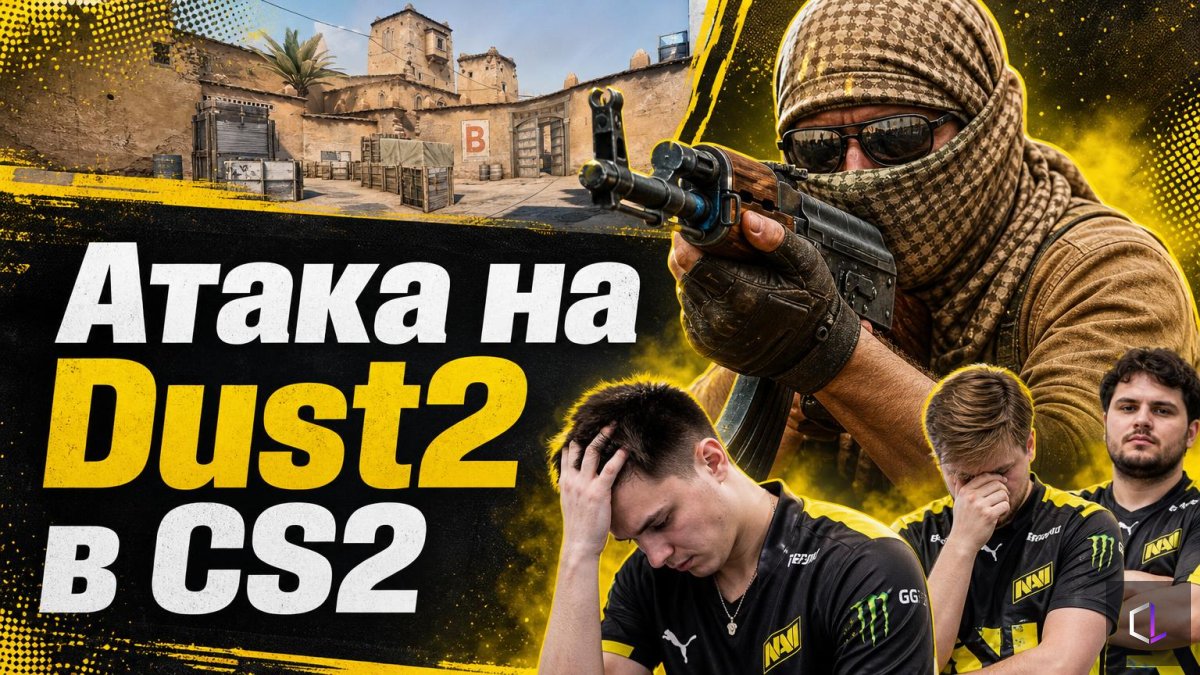
On the evening of October 27, Vitality advanced to the PGL Masters Bucharest 2026 quarterfinals. The number that stuck in memory the most: in the match against NAVI on Dust2, the team on the attack side did not win a single round. Not "lost most of them," but exactly zero: not one bomb plant, not one defender taken out.
A score like this is interesting not as a disgrace for a particular team, but as a reason to figure out what an attack on Dust2 is actually made of and why its failure looks exactly like this.
Why a Zero Is Not About Bad Luck
In CS2, the attacking side (T) has a harder game by definition: you have to either plant the bomb or eliminate all the defenders, while the defense (CT) has time, positions, and the ability to rotate. On most maps, the T side wins slightly fewer than half of the rounds even against evenly matched opponents. So swings of 30–40% on attack are normal. A complete zero for a side is a different category: it says the opponent had an answer ready for every option the team tried, while the team's own rounds gave them no footholds at all.
This is an important difference. You can lose several rounds in a row because of one failed utility setup or a lost pistol round. Losing all of them means that neither the fast early contact, nor the slow default, nor the cleanup after losses was working.
How the Attack on Dust2 Is Structured
The map is divided into three directions, and any T-side plan is built around them:
- A site via Long: a long open corridor where the first duel decides whether the attack has room to get out.
- Middle and Short (Catwalk): the center, from which you can either pressure A, switch to B, or simply gather information.
- B through tunnels: a narrow entrance where grenades play the main role; going in head-on without smokes and flashes means giving away frags.
A strong attack on Dust2 almost never picks one direction in advance. The team shows pressure in one place so that the defender on the other site is left without help, and only then decides where to go. When this mechanism breaks, for example when the defense reads the first thirty seconds and doesn't rotate, the attack loses its main tool: choice.
What Actually Falls Apart
If you look at a zero T side as a chain, one of three links usually breaks:
1. Information. Without scouting in the center and without knowing how many defenders are on the site, the final decision is made blind.
2. Tempo. Playing too slowly gives the CTs time to rotate, playing too fast turns the round into a trade with no plan.
3. The next step after the first loss. After the first player is knocked out, the team should have a prepared response: keep going on the same site, fall back to a default, or change direction. If there is no such agreement, the round ends up as a series of individual decisions.
That same evening, in discussion of the scene, b1t said a laconic line: "B is closed." On its own it is a short callout, a message that the defense on B is holding. But this is exactly what the moment looks like when the attack's option disappears: one site is closed, and pressure on the other has not been created.
An Example from the Same Day
The stats of the player iM in the series against Vitality are also telling: across two maps he got only one frag on the attack side against 22 deaths. This figure illustrates the same mechanism from another angle: if a player repeatedly enters a duel first without support from a flash or a teammate, he turns from a source of pressure into a source of information for the opponent. The same role contact can be played strongly or weakly, and the difference lies in who backs it up and how.
How to Check Your Own Attack
A zero score for a side is a handy red light, but it's worth looking deeper:
- How many rounds on T did you open before the thirtieth second, and how many of them ended with a plant?
- How many of the lost rounds ended with a first loss without a trade, meaning without a return frag from a teammate?
- Does the team have at least two plans for each site that differ not only in location but also in tempo?
If there are no clear answers to these questions, the problem most likely isn't in the shooting. A zero T side on Dust2 at a major tournament is a reminder that even top-level teams can end up without a plan when the opponent reads their every move. And that is exactly why the next match on this map, like any other, begins not with aim but with an agreement: what we do if the first decision doesn't work.