Liquid's CS2 2026 Final: Same Club, but the Roster Is an Entirely Different Story
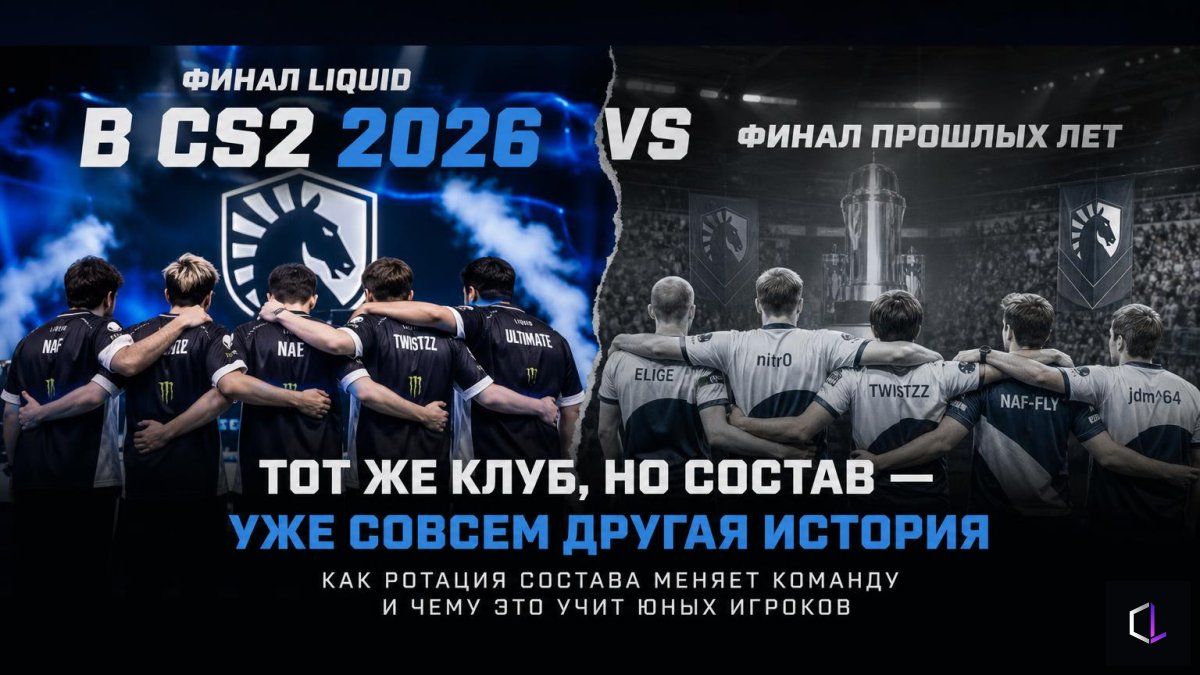
Liquid is back in a tournament final — and that's a great occasion to compare not the result, but the path. Almost four years have passed between this team's previous final and the current one. In that time, almost the entire roster has changed, except for one player. And this is where the truly interesting conversation begins — not about luck, but about how the team system in esports is built.
The Roster Then and Now
In the previous final, Liquid played with a lineup of YEKINDAR, oSee, NAF, EliGE, and nitr0 — a squad of players with different styles: aggressive entry, stable sniping, an experienced round leader. Now, in the final, it's effectively a new team under the same brand. From the old roster, only EliGE remains, having become a kind of bridge between the club's eras.
On paper, this looks like an ordinary rebuild. In reality, these are two different philosophies of the same organization: back then, the bet was on star individuals, each of whom carried the game through personal skill. Now the emphasis has clearly shifted toward cohesion and systemic play, where even without superstars, the team is able to reach the final through structure.
Why This Matters, and Isn't Just Transfer History
For a spectator, the outcome is the same — Liquid is in the final. But for those learning to play professionally, the difference is huge. The first roster was built around bright names, and when one of them lost form or left, the whole team would drop. The second approach is about a reproducible result: the system can be preserved even if one or two players change.
This is a direct parallel to what's happening around the captains of top teams who publicly speak about their hunger to win again and again, despite dozens of trophies in their careers. The hunger for victory doesn't disappear with a roster change — it lives in the team's structure, not only in a specific player.
What the Two Finals Have in Common
Despite all the differences, there is also something in common: both times Liquid reached the final not thanks to one super-player, but thanks to a balance of roles. It's just that before, the balance rested on the individual experience of veterans, whereas now it rests on cohesion and each roster member's understanding of their role.
The difference lies in resilience. The old model is fragile: if one person leaves, the whole chemistry falls apart. The new model is more flexible: players can be rotated, and the result remains, because the game is built not on specific names, but on processes — communication, zone distribution, reading the round economy.
What Teenagers Aiming for the Pro Scene Should Take Away From This
- Don't tie your development to just one role or one "star" player on the team — learn to understand the game as a whole.
- Over time, cohesion and communication beat individual skill — especially over the long distance of tournaments.
- A roster change is not a tragedy or a team's collapse, but part of the normal esports cycle, and top organizations go through this regularly.
Two finals of the same team is, essentially, a case study showing that a stable result isn't made by the names on the jerseys, but by a system that survives the departure of even key players.