The problem isn't talent, it's structure
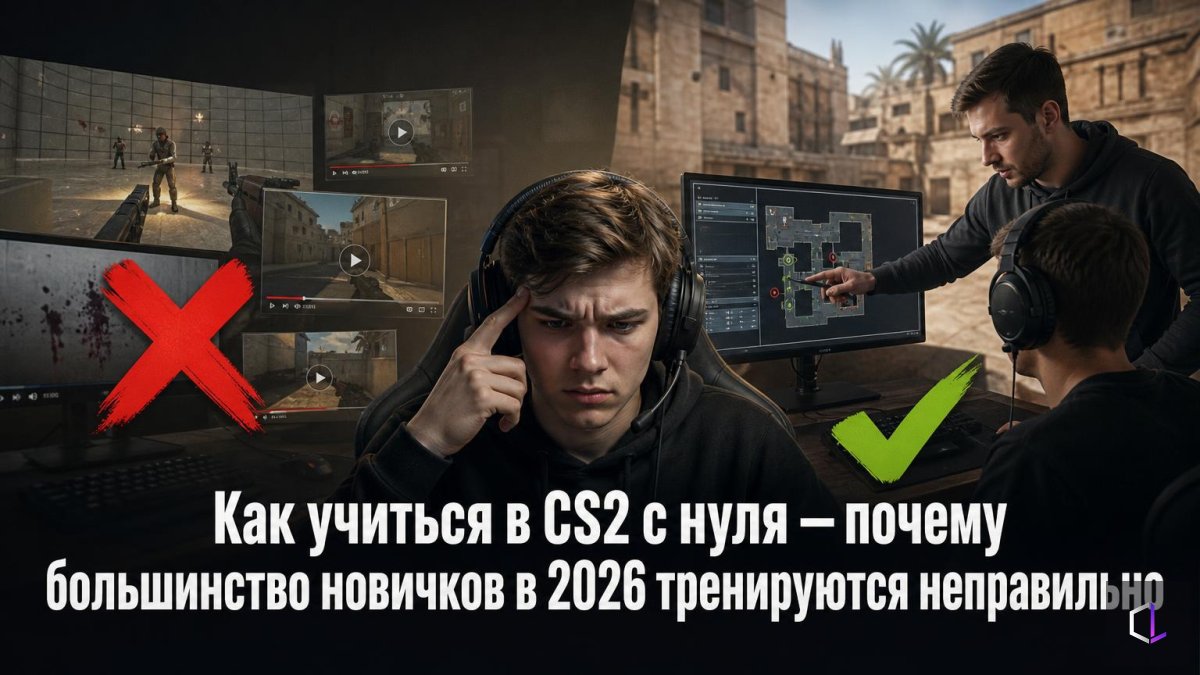
Every week teenagers come to us who have hundreds of hours in CS2 behind them — and almost zero progress in rank. This doesn't mean they lack ability. It means those hours were spent chaotically: deathmatch without a goal, videos of top frags instead of analyzing their own mistakes, random advice from chats. At CyberLab, we believe this is exactly where most of the community gets it wrong: they advise "just play more," even though volume without structure barely converts into skill.
What actually moves a player's level forward
If you break down a beginner's path into components, you don't get a list of "hot life hacks" but a system that seems boring at first glance:
- Mechanics broken into parts. Aiming separately, spray control separately, movement separately — not all mixed together at once in ranked matches.
- Reviewing your own demos, not other people's highlights. Someone else's frag teaches nothing if it can't be transferred to your position and your reaction.
- Understanding the map, not just the point on the crosshair: timings, sound, rotations — what turns a shooter into a player that a team wants.
- Communication. Even strong mechanics won't save you if a player can't relay information to teammates briefly and to the point.
The problem is that teenagers rarely manage to honestly assess what exactly they're missing — mechanics, tactics, or discipline. Without an outside perspective, it's easy to get stuck at the same level for months, even playing every day.
Why "just play" is not a strategy
It's a common belief in the community that the path to growth is volume: the more matches, the higher the rank. We disagree. Volume without feedback reinforces not only good habits but bad ones too — and it does so subconsciously, unnoticed by the player themselves. A young player who holds a position incorrectly for months won't "play their way" into correct behavior — they'll simply become faster at doing the same wrong thing.
Real progress begins where there's a cycle: play — review — fix a specific detail — play again. Without this cycle, even the most motivated teenager stays stuck in place, while parents watch the growing number of hours in Steam and their child's falling motivation.
Where to start if you're just opening up CS2 for your child
If a teenager is just beginning their journey in the game, it's more important to choose the right learning order than the amount of content. First — the basics of mechanics and understanding one map, then — a team role, and only after that — the nuances of the meta and professional tactics. Skipping steps is tempting, but this is exactly what most often creates that same "ceiling" of 1000+ hours without growth that we see in many beginners.