Streamer Stray228 recently spoke about the Dota 2 commend system in harsh terms and suggested that playing was better without it. It's a vivid opinion, but the question behind it is quite practical: what does this system actually do, and can it be trusted?
What the commend system is and why it exists
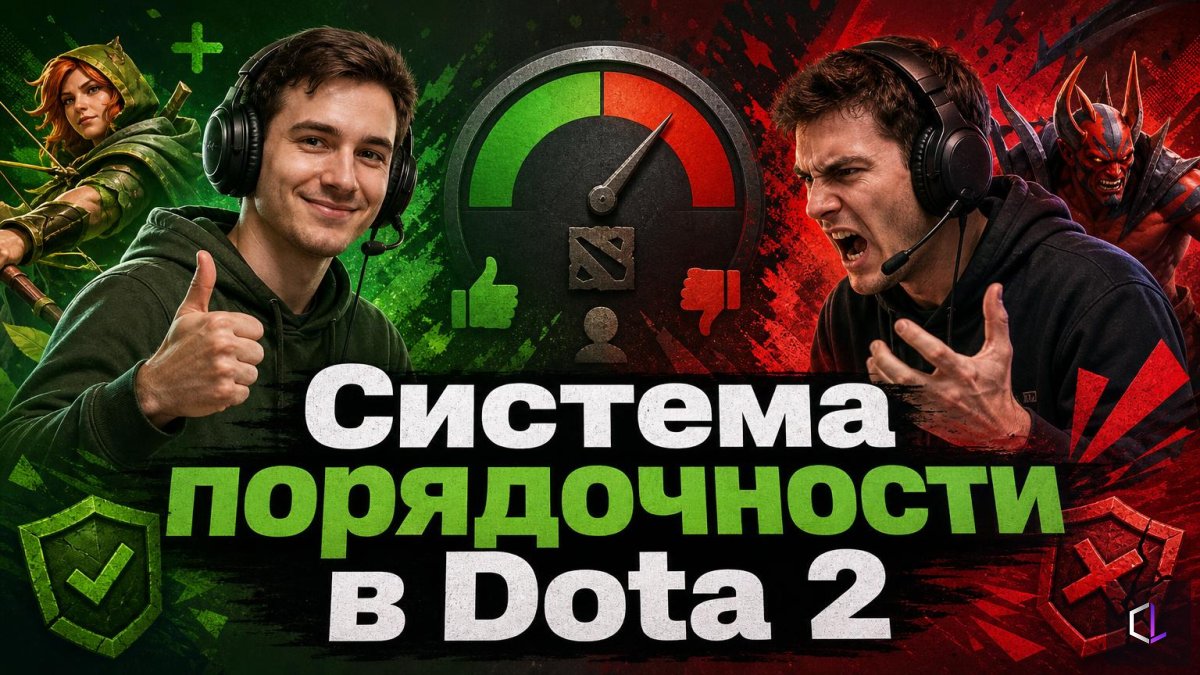
The commend system (in the gaming community it is often called the behavior score) is a hidden assessment of how a player behaves in matches: whether they insult allies, leave the game, or deliberately throw. The idea is simple: players with a low score are separated from everyone else so that toxicity doesn't ruin matches for those who play calmly.
The main feature of such a system is that it is built on signals from other people: reports and marks after the match. The algorithm does not hear voice or read chat the way a moderator would. It sums up what it has been told and compares it with the player's behavior as a whole.
Why it isn't trusted
Dissatisfaction usually comes down to three complaints.
- A report is easy to send in the heat of the moment. You lost your lane — you flagged an ally, even if they did nothing wrong. The system gets noise instead of an accurate signal.
- Players can't see their score in full. When it's unclear what changed, why, and by how much, it's hard to believe the mechanism is fair.
- Punishment and reward work slowly. One rough evening shouldn't wreck your reputation, but a single good match won't repair it either. This inertia irritates those who believe they have already improved.
The criticism is largely fair: a system that relies on human reports inevitably inherits human emotions. But it doesn't follow that things would be better without it. Matchmaking with no accounting for behavior hands toxic players out to everyone at random, and the victims are first and foremost newcomers and those who play without voice chat.
How to influence your score
There are things here that depend only on you.
1. Don't send reports in the heat of the moment. When the match is over, wait a minute and think about whether it was a real violation or just bad play.
2. Turn off chat when you feel yourself getting worked up. Muting is not weakness but a way to avoid getting reported yourself.
3. Don't abandon the match. Leaving the game hurts both your team and your reputation more than any harsh phrase.
4. Choose a neutral tone when assessing other people's mistakes. "Let's do better on the next wave" works better than a post-mortem in chat.
Where mechanics end and psychology begins
Any behavior system is only the top layer. Underneath lies what losing does to a player in ranked matches: tilt, irritation, the search for someone to blame. Pro players live with this constantly, and teams work on communication separately: they agree on who speaks and when in tense moments, how mistakes are recorded, and how not to carry them over to the next map.
So the argument over whether the commend system is good or bad is worth moving to a more useful level. The system will always be imperfect, but the habit of not snapping at allies remains your own and pays off regardless of how the algorithm works: the game becomes calmer, decisions clearer, and wins come more often not because you were rated higher, but because the team really does play better with you.