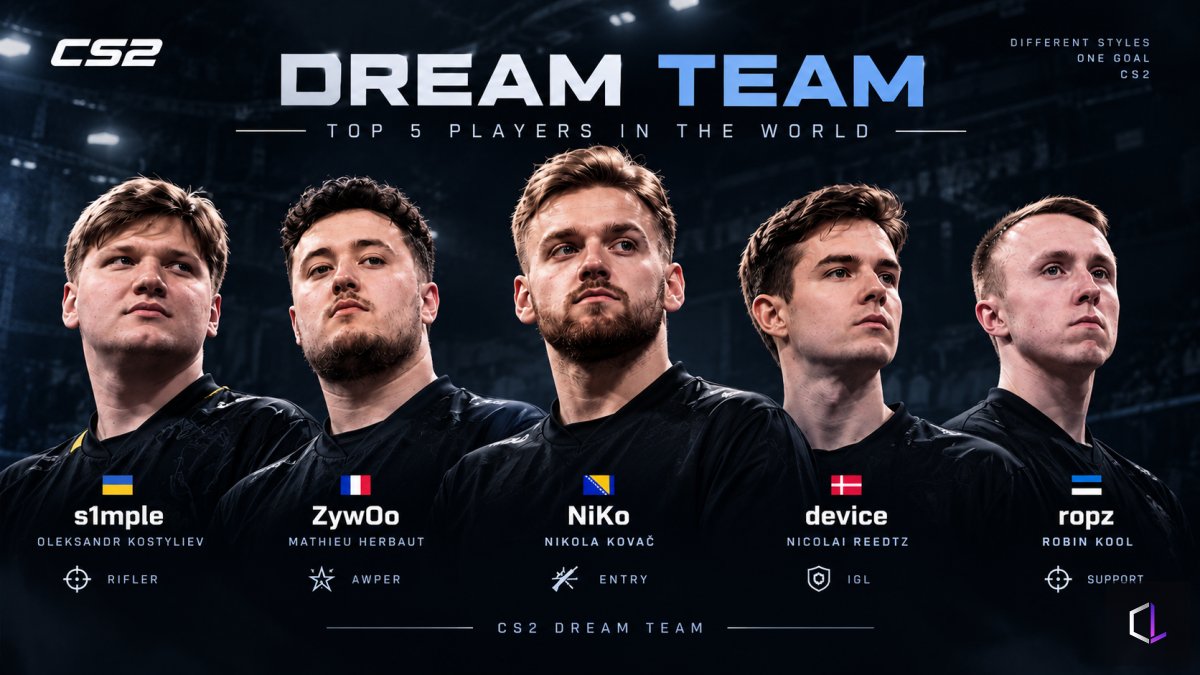
NiKo's Dream Roster in CS2: Why Fantasy About the Perfect Team Teaches Us Real Tactics
Why pros even bother building "perfect fives"
One of the well-known CS2 players recently published his version of a dream team made up of the best players in the history of the discipline: a captain, a sniper, an entry fragger, a support, and a lurker. At first glance, this is just entertainment content — a nice fantasy for fans. But if you look closer, such lists actually illustrate quite well how team mechanics work in CS2 and why it's impossible to win in esports alone, even with phenomenal aim.
Five roles are not a formality, but a division of labor
In any strong CS2 team, roles are not distributed randomly, and the dream roster highlights this better than any textbook:
- Captain (IGL) — the person who reads the game, builds strategy for a specific map and opponent, and manages the round economy. This is the team's chess player, and often far from the player with the most frags.
- Sniper (AWPer) — holds key points on the map, picks off incoming opponents from a distance, and gives the team information and time.
- Entry fragger — the first to enter a confrontation, taking on the greatest risk in order to open up space for the rest of the team.
- Support/clutcher — watches teammates' backs, throws utility ahead of the entry fragger, and in decisive moments is able to pull out a round against multiple opponents.
- Lurker — plays at a distance from the team, creates pressure from the flank, and catches the opponent making timing mistakes.
When a teenager starts playing CS2, they almost always want to be "that sniper" or the person with the best KD. But the real strength of a team is built on everyone being ready to take on a less noticeable but critically important role — and to switch between roles when needed.
Why a "roster of legends" wouldn't automatically win
There's an interesting paradox here: if you put together the five best individual players into one team right now, the result is far from guaranteed. The history of esports knows dozens of examples where a team with a star-studded lineup fell apart due to a lack of chemistry, while a supposed underdog beat the favorite precisely because of cohesion and mutual understanding. The game isn't just about mechanical skills, but also about hundreds of hours of joint training, demo reviews, and getting used to each other's personalities within the team.
This is a key point worth explaining to young players from the very start: individual skill opens the door to esports, but it's team chemistry that keeps you in it.
What should an aspiring player do about this
If a child or teenager is passionate about CS2 and dreams of one day joining a professional organization, it's useful to start trying out different roles now, rather than fixating on just one. Understanding how a support player thinks, what a lurker's life is like, and what kind of workload a captain carries makes a player more flexible and valuable to any team — even if they end up staying a pure fragger.
Fantasy rosters like the one proposed by the well-known professional aren't just an occasion for nostalgia about scene legends. They're a good tool for explaining role mechanics in simple terms and showing that behind beautiful frags there's always a well-thought-out team structure.


