Top-1 Rank in CS2 in 2026: What the 9Class Stream Tells Us About the Path to the Top of the Ladder
A Top-1 Rank Before the Eyes of Viewers — Why It Resonates
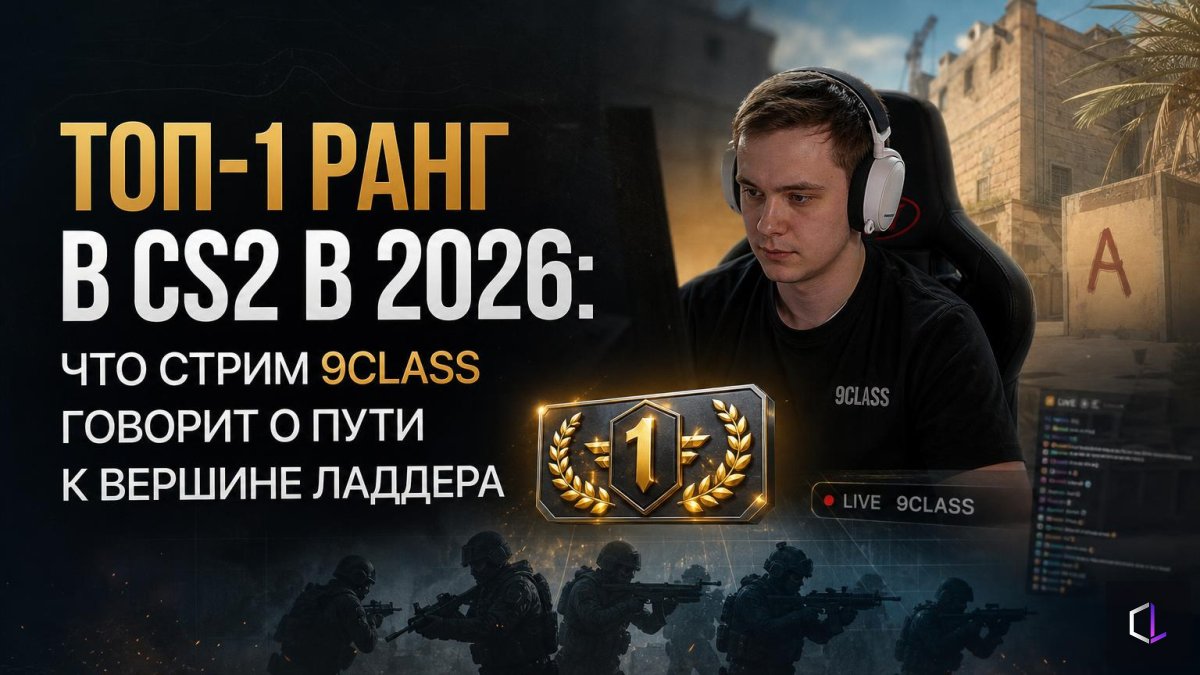
A few days ago, one of the well-known streamers reached the first rank of the CS2 ladder live during a broadcast, playing support positions and Io's cow. The moment turned out to be emotional: the player openly admitted that the achievement happened "together with the viewers" — meaning the audience watched the entire climb rather than seeing the finished result after the fact. It's exactly this transparency that makes streams like this far more valuable learning material than any edited highlight reel.
For parents and teenagers who follow esports not just for entertainment but with an eye toward their own growth in the game, there's an important lesson here: a top rank isn't the result of one lucky evening or a string of lucky rounds — it's the result of dozens of hours of thoughtful play, where mistakes are analyzed and decisions are repeated until they become automatic.
What's Behind the Words "Top-1"
Let's break down point by point what it really takes to reach the top of the ladder, rather than just hovering in the middle of the rating:
- Consistency matters more than peak moments. One incredible clutch won't raise your rank — a series of matches where the player consistently fulfills their role, whether support or core, will.
- Understanding the role, not just mechanics. Playing support positions is harder than it looks: you need to read the map, provide information in time, and sacrifice frags for the sake of teammates.
- Emotional stability in public. Playing under the pressure of viewers during a live broadcast is a separate skill, trained separately from aim.
- A long path, not a single evening. Climbing to top-1 usually takes weeks of consistent play, not one lucky stream.
Why It's Useful for Children and Teenagers to Watch Moments Like This
Many young players perceive rank as a matter of chance or the result of a "lucky day." Watching the real progress of an experienced player in real time destroys this myth: you can see how decisions are made, how lost rounds are analyzed, how tactics change as the game progresses. This is much more honest and informative than a final screenshot with a rank and no context.
It's worth separately noting the choice of positions: the climb was made not on the "easy" fragger roles, but on support and Io's cow — positions that require playing primarily with your head, not your reflexes. This is a good signal for those who think that a perfect aim is essential for a high rank. In reality, sound game reading and teamwork often carry more weight than reaction speed.
What to Do About It in Practice
If a child or teenager wants to follow a similar path, it's important to stop chasing rank as an end in itself and start working on specific weak points: round economy, team communication, positioning on the map. Reviewing your own matches — even without a camera and viewers — works on the same principle as a public stream: the mistake is seen, discussed, and corrected in the next game.
It's precisely systematic work, not a one-time success, that separates a random spike in rating from a stable top rank that holds not for one evening, but season after season.