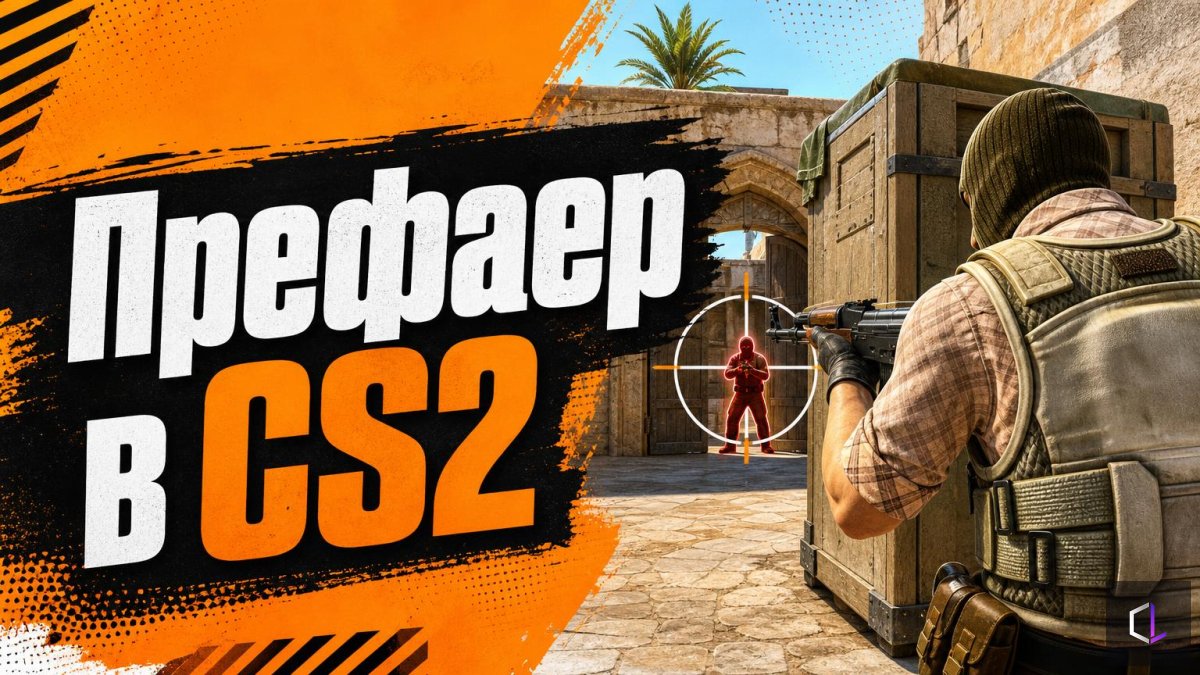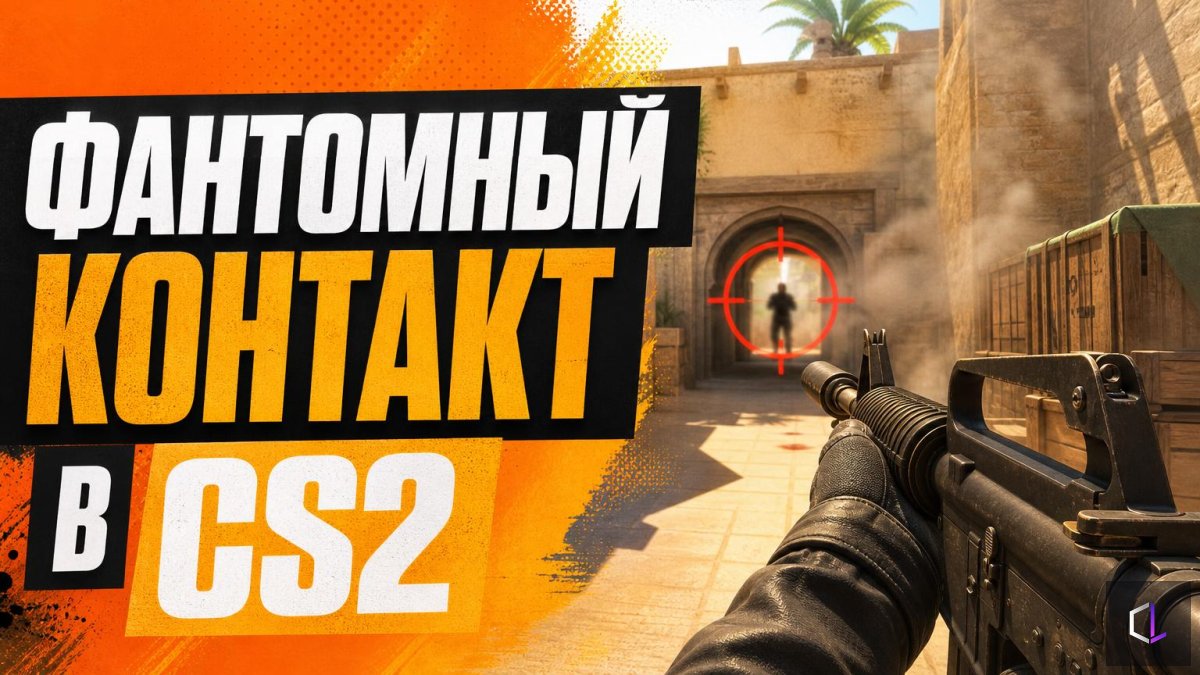
In early November 2026, the CS2 community is discussing a short in-game episode: for a fraction of a second, an opponent's model flashed in a player's crosshair, the player reacted, but no one turned out to be nearby. Some viewers joke that abilities from other shooters have been added to the game, while others seriously ask whether it was a hallucination. The episode itself is fleeting, but the situation it shows is familiar to anyone who has played at any level: reacting to an enemy who isn't there.
Where a False Contact Comes From
There is no single cause for this effect. In a tense round, the brain works ahead of events: it expects an enemy at a typical spot in advance and fills in the picture from the slightest hint. A dark silhouette against the background, a flickering shadow, movement at the edge of the screen, the sound of footsteps from the other side of the map. A single match with the expectation is enough for the finger to have already started moving.
Three factors amplify the effect:
- fatigue and a series of long maps, when attention sags;
- high tension in a clutch or in a decisive round, when the expectation of an enemy is at its maximum;
- the habit of holding the same angle for ten seconds in a row: the gaze "glazes over," and any blur is perceived as a target.
It's important that a false contact is costly not in itself, but because of what follows it. A shot gives away your position, a spent grenade won't reach the real enemy, and a shout of "he's here!" makes the team turn in the wrong direction.
The Confirmation Rule
Professional teams solve this problem not with "better eyesight" but with communication discipline. A working scheme looks like this:
1. A contact you saw in a single glance is not called an enemy. It's "maybe I see someone" or "shadow on five."
2. Before calling the team, check a second source: sound, a gunshot, damage dealt by a teammate, radar data.
3. Give information in a single format: position, number, health if known. Anything you don't know is left out of the call.
4. Don't waste a grenade or force a duel on an unconfirmed contact. Wait a fraction of a second: a real enemy will stay in frame or give themselves away with a shot.
This is how the separation of "saw" and "know" works: the former stays in your head, the latter goes out over the team's comms.
How to Train a Calm Gaze
Simple things that require no complex preparation help against false triggers:
- Change your focus point. If you hold an angle for a long time, shift your gaze along the line of the crosshair rather than fixating on a single point: a "stuck" gaze produces phantoms more often.
- Play with the sound on at a normal volume. Footsteps and reloads confirm an enemy's presence more reliably than a lone silhouette.
- Watch your routine. Lack of sleep and long marathons directly increase the share of false reactions, and no settings will fix that.
- Review your own cases. If a shot went "at nobody," it's worth noting the conditions under which it happened: map, side, round, fatigue. A pattern usually emerges after several such notes.
The episode the community is watching now is good because it shows the mechanism without tragedy: no one lost a round, but everyone saw how easily expectation replaces reality. A player who has learned to tell "I thought I saw something" from "I confirmed it" loses fewer rounds than a player with faster aim but without this habit.