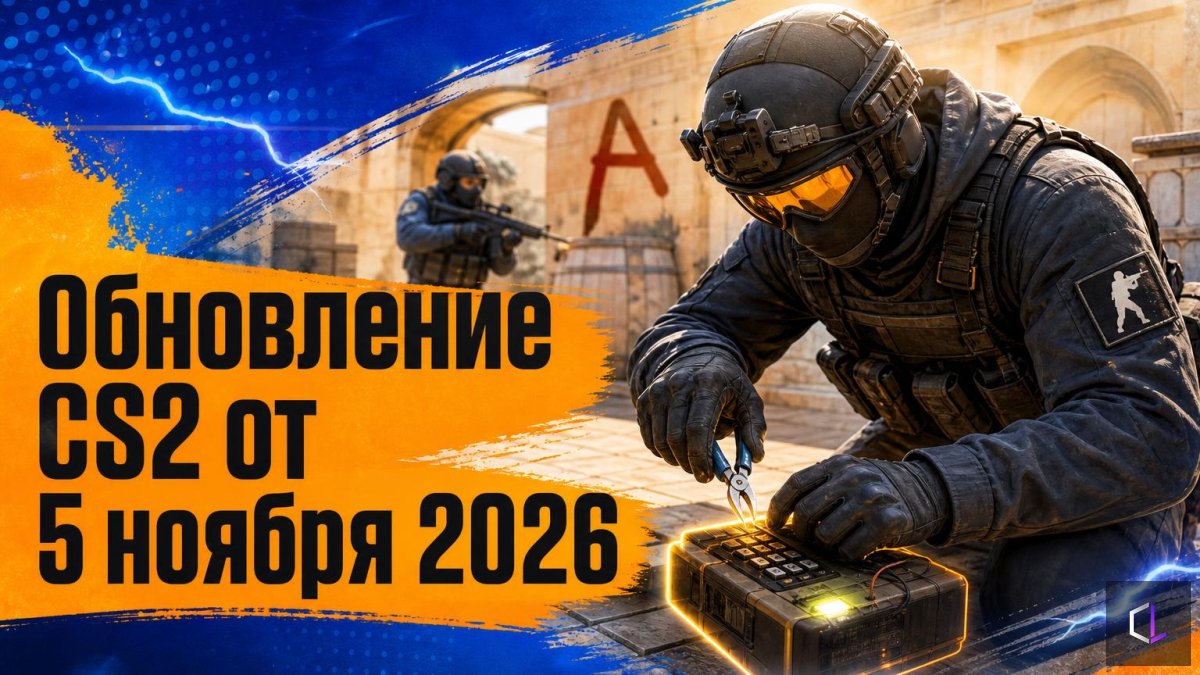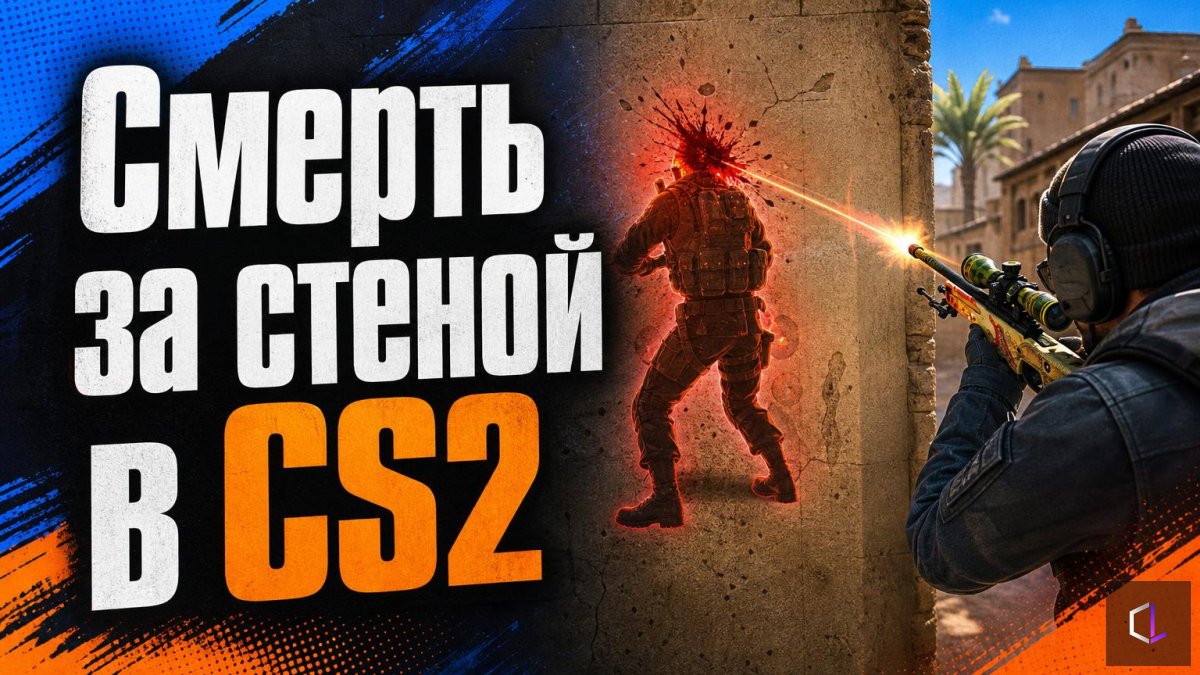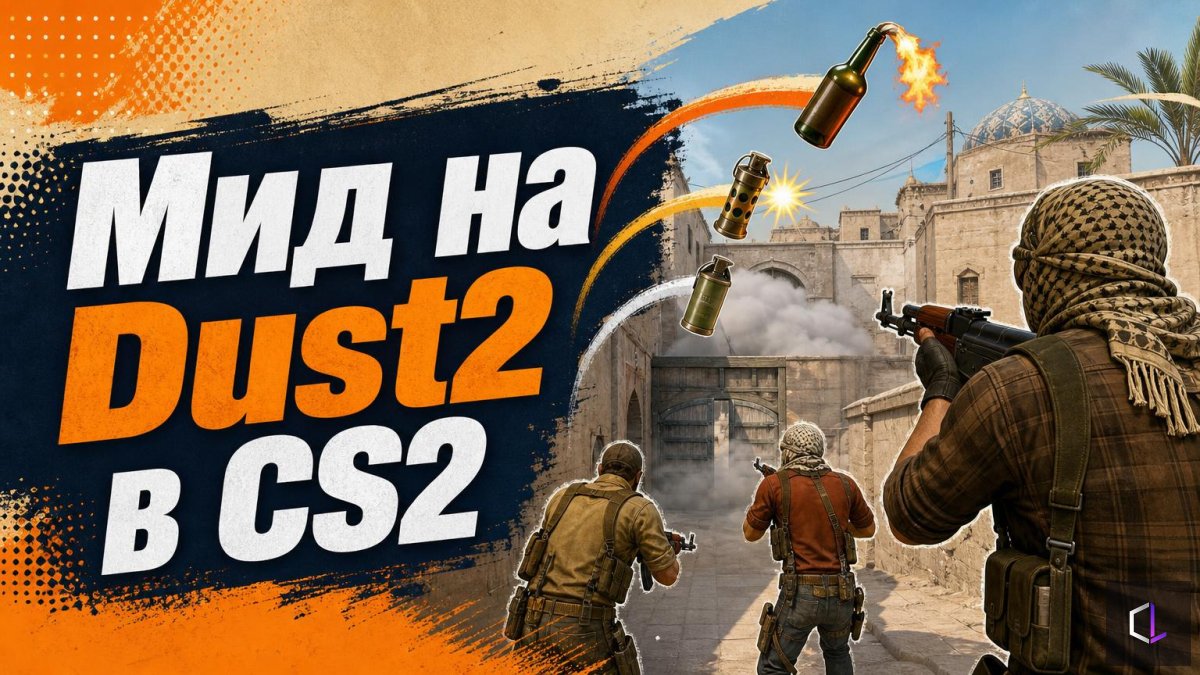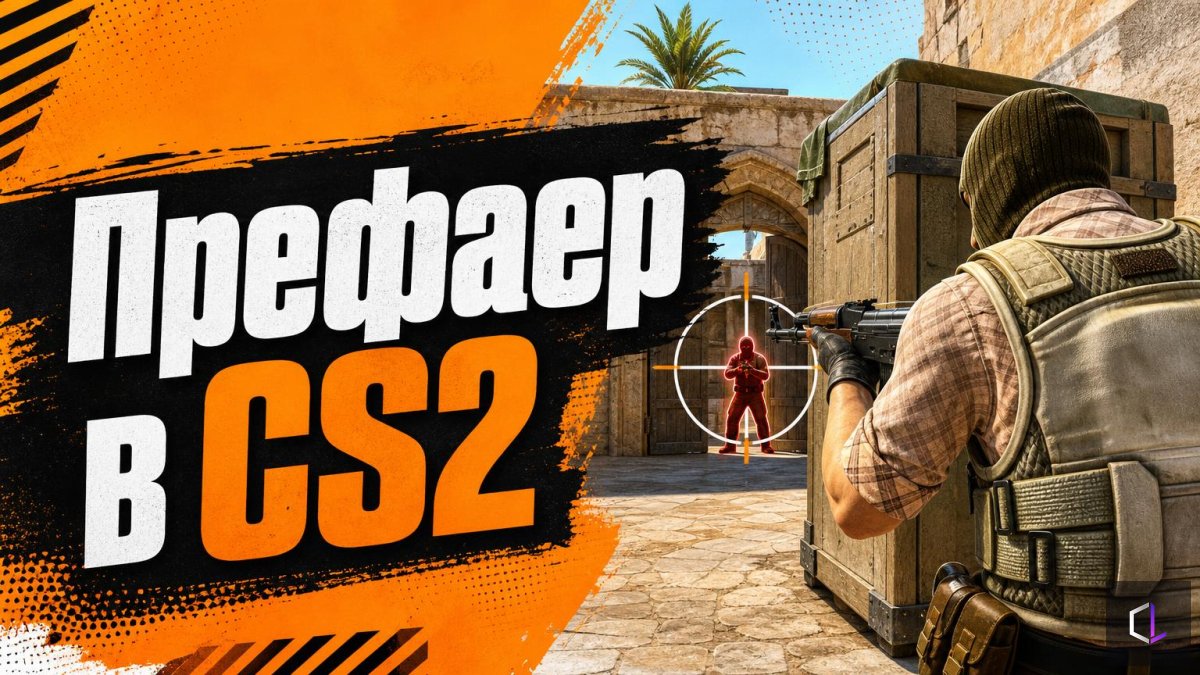
On November 4, 2026, a collection of nine Steam Workshop maps for prefire training spread through the CS2 community: Mirage, Dust2, Inferno, Nuke, Ancient, Anubis, Overpass, Train, and Cache. Prefire is shooting at a spot where an opponent might be standing before they've appeared on screen. The nine maps cover almost the entire map pool, so there's no longer any need to look for a separate training map for each site.
Why Shoot at Empty Space
The duel on a peek is almost always won by the player whose crosshair is already in the right place at the moment of contact. If you first see the enemy and only then aim, that costs reaction time, and no warm-up can shorten it. Prefire removes aiming from the equation: the crosshair travels along the wall ahead of the player and is already on the target the moment it appears.
Workshop maps for this kind of practice are usually built the same way: you run a route through an empty site and practice shooting at the typical positions where players hold an angle. The movements are learned through repetition, and in a match your hand performs them without any input from your head.
Four Rules for a Single Training Session
Simply running around the map does little on its own. The benefit comes when every run has a task:
- Crosshair height. Keep the crosshair at the head level of a standing player, at the edge of the wall. A crosshair lowered toward the floor "for comfort" will have to be raised on the peek, and that costs those extra hundredths of a second.
- Stopping before the shot. Shooting while running is inaccurate. Before pressing the button, kill your movement with the opposite key (counter-strafe) and only then fire. The goal of the training is for the stop and the shot to merge into a single motion.
- Order of checking angles. Close spots first, then far ones. The crosshair is carried in an arc from wall to wall, without sharp jerks across the whole screen.
- Tracking. Keep a simple table: how many runs, how many first-contact hits. A series of ten passes on one site gives an honest picture, while the feeling of "I seem to be getting it" does not. Make sure the percentage grows from session to session, not just on one lucky evening.
For a warm-up, 15–20 minutes is enough: two or three sites on a map you play in matches, with a few series on each. It's better to pick the maps that are currently in your matchmaking list or in your team's reserve than to grind all nine in a row.
Where Prefire Does Harm
A shot gives away your position: the sound is heard by nearby players, and the opponent learns that you are on that line. That's why in a real game you can't shoot every angle in a row. Prefire is justified where a position is likely: a standard spot where a player usually stands, a grenade the enemy has thrown, footsteps, or information from a teammate. On the remaining angles the crosshair is still guided along the wall, but the finger stays put.
A training map won't show you this distinction, because it "highlights" all positions as equal. The player's task when moving from the workshop to a match is to choose, from the memorized spots, the two or three most likely ones in a particular round, rather than spraying the whole set. Then the memorized route works for information rather than against it.