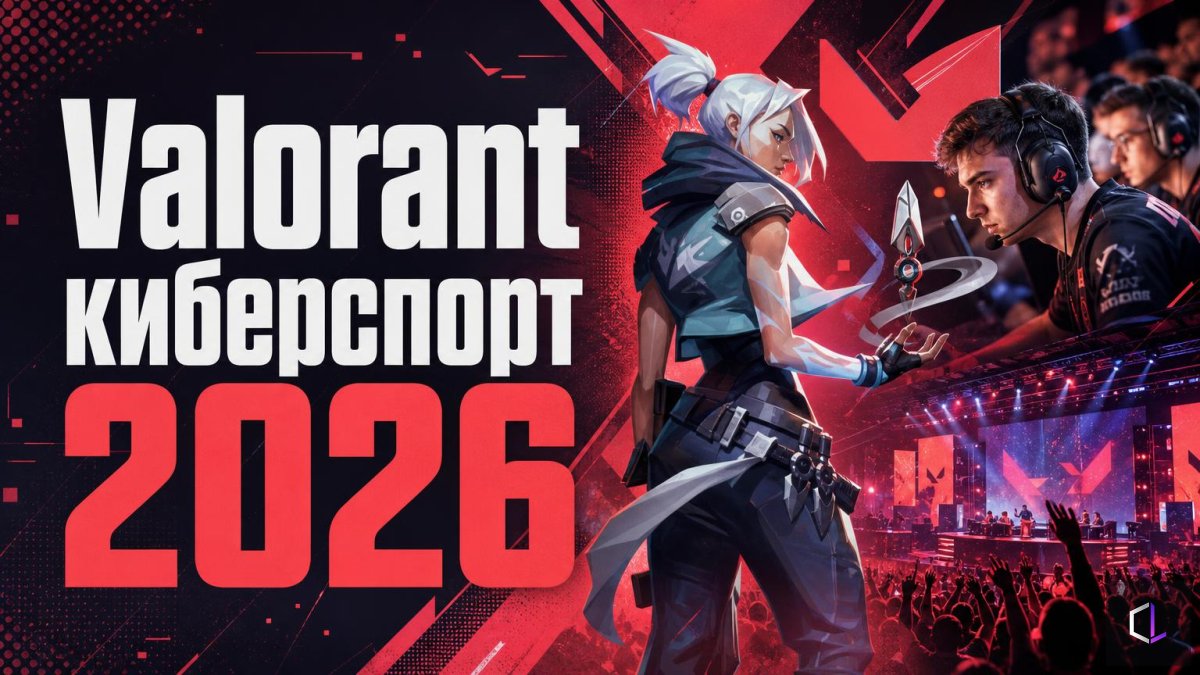
CyberLab is preparing to launch Valorant training — and this is a good occasion to understand what the discipline is and where it stands among other esports games. This article contains no concrete data on the current 2026 season — rosters, prize pools, tournament schedules — so it will focus on what is stable and verifiable through the structure of the game itself.
How Valorant differs from CS2
Valorant is a first-person tactical shooter in which two teams of five play rounds: one plants a bomb (in the game it is called the "spike"), the other defends the sites. At first glance it is a relative of CS2. The main difference is agents: each character has their own set of abilities. One places smokes, another blinds, a third gathers information through walls.
Because of this, tactics in Valorant are built not only around weapons and positions, but also around combinations of abilities. A squad of five agents is a composition, as in hero-based games: each role has its own task, and a successful combination can decide a round before the first shot is fired.
Roles and team play
Agents are usually divided into classes: duelists go in first to trade and open up space, initiators gather information, controllers cut off vision with smokes, and sentinels hold flanks and sites. For a viewer, this is a convenient key to a match: the composition shows what the team's plan is.
For a player, this means that strong aim is a necessary but insufficient condition. You need to understand when to spend an ability and when to save it for the next round, how to coordinate entering a site with a teammate, and who is responsible for information at that moment. The economy also plays a role: abilities and weapons are bought with in-game money, so the decision of "save or spend" affects several rounds ahead.
Why the discipline matters for the industry
Tactical shooters are one of the pillars of esports: they have a developed spectator culture, a round format that is easy for a newcomer to follow, and a high skill ceiling. Valorant grew up within this ecosystem and attracts an audience that is close to CS2 but interested in a different mechanic — one with agents and abilities.
For the region this is also a question of expanding opportunities: the more disciplines with a strong competitive layer there are, the wider the choice for players, coaches, and organizers. A player who has grown tired of one shooter gets a game that is similar in spirit but independent.
What carries over from CS2 and what does not
Some skills are shared: aiming, recoil control, work with the map, understanding of round timing, and the ability to read an opponent's behavior. A CS2 player who moves to Valorant does not start from scratch — the habit of thinking in rounds and positions remains.
What is new is ability management and team synergy between agents. Here CS2 experience does not provide ready-made answers: you will have to learn which agents work better on which map, how standard setups are built, and how the rhythm of rounds differs. The discipline requires separate study, not a simple transfer of habits.
What a newcomer or viewer should watch for
To watch Valorant matches meaningfully, it is useful to keep three questions in mind: what agent composition the team has chosen and why, how abilities are distributed in key rounds, and what happens to the economy after a lost pistol round. These three layers explain most of what is visible on screen and help distinguish a flashy frag from a well-constructed round.
Valid answers to the question "what is happening with the discipline right now" will come from fresh tournament results and team standings — these are worth checking separately, on the organizers' official pages, and verifying against up-to-date sources.