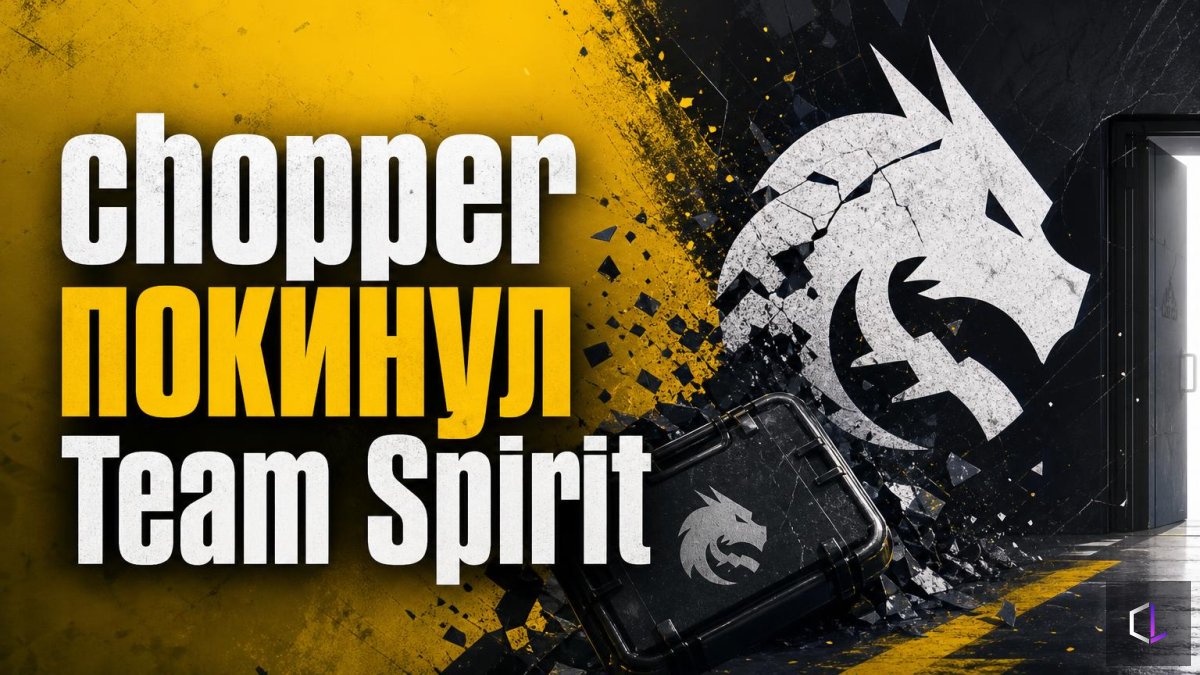
On November 6, 2026, Team Spirit officially announced chopper's departure. The club's statement included the words "Dear Lyonya, thank you for everything": the player and the organization spent seven years together, during which, according to the club, they experienced hundreds of bright moments and victories. It was specifically noted that it was as captain that chopper made the team world champions.
Such departures are rarely just a matter of changing one name on the roster. In CS2, the captain most often combines the role of IGL, that is, the in-game leader: the person who decides during a round where the team goes, when to call a timeout, and how to regroup after a lost pistol round. That is why, along with the player, the team also loses a set of agreements built up over the years.
What a captain does that buying a player can't replace
A good fragger can be found in a single transfer window. A leader with whom the other four understand each other at a half-word cannot be grown in that time. Seven years of playing together means a shared language: short callouts, familiar reactions when a plan breaks down, knowing how each person behaves when on tilt. A new person in this spot starts essentially from scratch, even if he is mechanically stronger.
There is also a second side to this. When one person makes decisions for so long, the others get used to the idea that strategy lives "somewhere out there, with the captain." After his departure, the team has to redistribute responsibility: someone takes on tactics, someone takes on communication in clutches, someone takes on preparation for specific opponents.
How teams get through a change of leader
The scene's practice shows three typical paths. The first is bringing in a ready-made IGL from outside: it's fast, but it takes time to gel. The second is handing the role over within the roster: the system is preserved, but the new captain's own play changes, because part of his attention shifts from aim to running the round. The third is splitting the functions, where the coach or analyst builds the tactics while a player makes the decisions in the round.
Each option has a price. An outside leader risks not fitting in with the personalities, an inside one risks losing personal form, and the scheme with a coach requires trust between the staff and the players. Which path Team Spirit chooses will become clear from the first official matches after the announcement: in the first few series, what changes most noticeably is usually the timing of timeouts and the discipline in the economy.
Why this matters beyond a single club
The story of chopper shows how rare a long partnership between a leader and an organization has become. Seven years in one team is a span in which, in esports, patches, maps, the meta, and entire generations of competitors have time to change. It was precisely this stability that was part of the club's competitive advantage: at tournaments, such teams win not only through individual skill but also through being predictable to one another.
For a viewer, a captain's departure is a reason to watch more closely how the team plays rounds after a loss: that is where it shows whether leadership rests on one person or is distributed across the roster. For a player of any level, it is a reminder that a strong team is measured not by the sum of five players' aim, but by how quickly they can make a shared decision and carry it through.