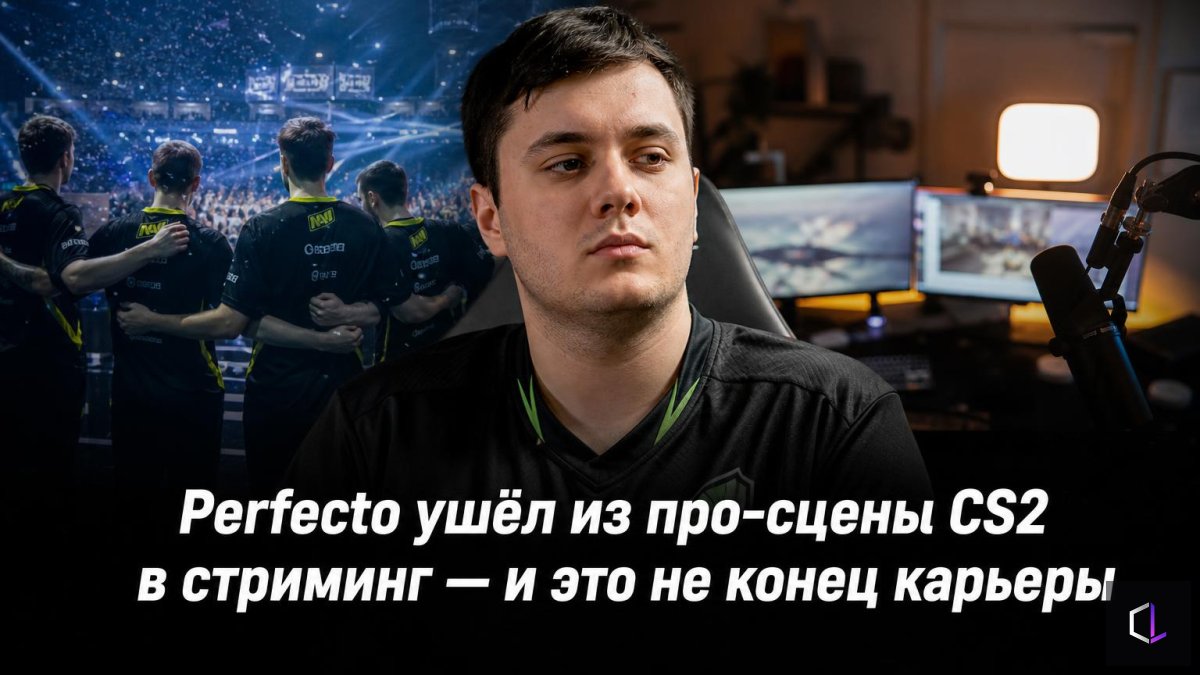
Andrey Perfecto, one of the most recognizable Russian CS2 players, announced that he is choosing streaming. He is not closing the door on his pro-scene career for good, but he has set his priorities plainly: his daughter is growing up, his wife is by his side, and time with them matters more to him than another season. According to him, he has lived in bootcamps since he was 17. He described his current project as a media story in which nobody expects to break through to a major.
What a Bootcamp Is and Why It Is So Exhausting
A bootcamp in esports is a training camp: a team gathers in one place for weeks or months and lives by a strict schedule. Practice, reviewing recordings, playing at tournaments, returning to the hotel — and then it all starts over. Formally it is work, but in practice it is a life without a familiar home. For a player who started at 17, this routine takes up almost his entire adult life.
Professional esports is generally set up so that personal life adapts to the calendar, not the other way around. Tournament schedules are made by organizers, a roster change can happen at any moment, and most players' peak form falls within a fairly short window. That is why such admissions are not weakness, but a sober assessment of the price paid for a place at the top.
Streaming as a Separate Career
The words that the project is "media with no expectation of making a major" should be read as a clear change of goal. A major is the biggest tournament format in CS2, and getting to one means passing a multi-stage qualification that requires stable results over months. Streaming requires different things: regularity of going live, the ability to hold the audience's attention, and work with the community. Aim and map knowledge are needed here, but they don't decide everything.
For a player with a name, this is a viable path. The audience already knows him from his performances, and trust in an expert who has come through the pro scene is valued more than in a random blogger. This has already happened with dozens of former professionals: some stay in the industry as streamers, others as commentators, analysts, or coaches.
Why Such Stories Have Become More Noticeable
Five to seven years ago, leaving the pro scene was perceived almost as a defeat: the player couldn't cope and dropped off the list. Now the picture is softer. The media side of the industry has grown, sponsors willingly work with content creators, and the community treats a choice in favor of family with respect. An understanding has emerged that a career in esports doesn't have to end on stage, but can have several phases.
At the same time, it is important not to romanticize. Streaming is also work, and no less nerve-racking: unstable income, pressure from the audience, the need to be on camera constantly. The difference is that the schedule can be built around home, rather than around someone else's tournament calendar. This is exactly the difference Perfecto named as the main reason.
The question of whether he will ever return to a roster remains open: the player himself only said that his professional career is not over for him. But for now his main project is not a team and not a major, but his own channel and the time that can finally be spent not at bootcamps.