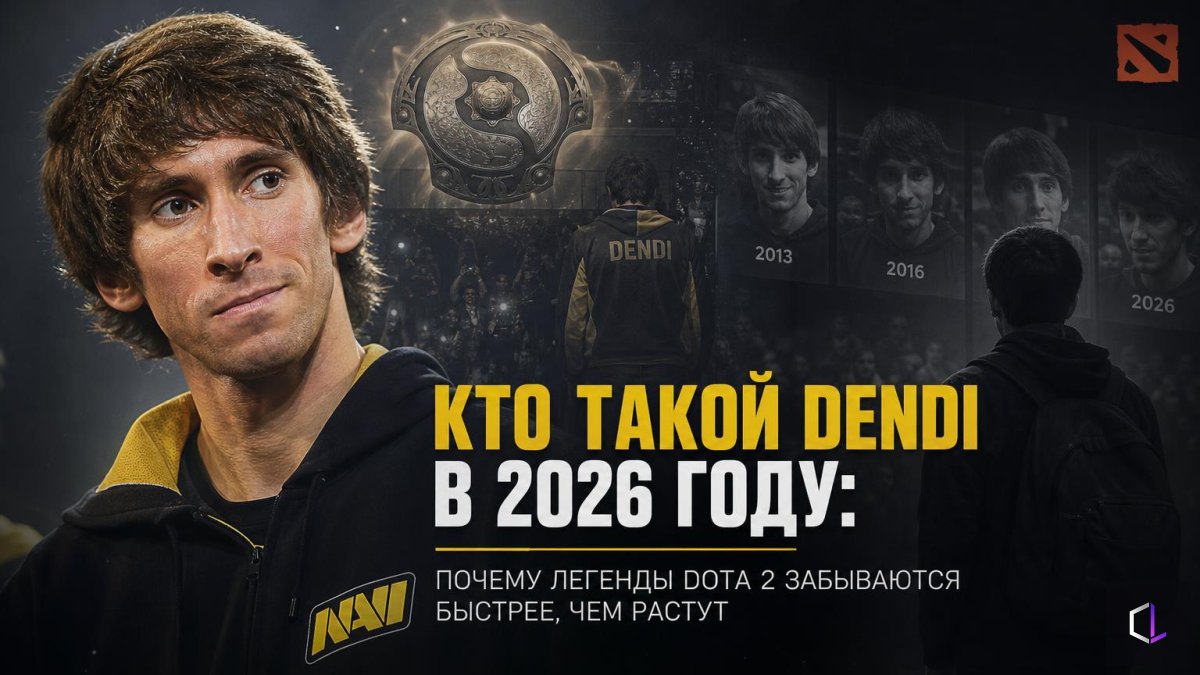
Who is Dendi in 2026: why Dota 2 legends are forgotten faster than they rise
Fame that doesn't last forever
A few days ago, the esports community once again brought up a topic that sounds painful for everyone who caught the golden era of Dota 2: who remembers Dendi now? The question is rhetorical — and at the same time very honest. There was a period when this player's name was heard literally "from every corner": he got his own official emote on a streaming platform, which in itself is a unique case for the discipline. Dendi wasn't just a top player — he was the face of Dota 2 for millions of viewers.
Today, in 2026, for many teenagers who are just getting into the game, this name means nothing. And it's not that Dendi stopped being talented or that his achievements were devalued. It's about the very nature of esports — an industry where generational change happens many times faster than in traditional sports.
Why this happens
There's a simple and harsh rule: wins alone aren't enough to remain in history forever. You can win ten major tournaments in a row, be unbeatable for many years — and then one bad stretch, one failed season, and people start talking about you in the past tense. And this applies not only to players, but to entire organizations: the audience switches its attention to wherever the results, emotions, and bright moments are happening right now.
For young players and their parents, this is an important lesson. Esports isn't a game of long-term popularity for one name. It's a constant race, where yesterday's tournament hero may today be just a recognizable veteran, and in a couple of years — a historical fact for those who didn't witness his prime. The audience lives in the present moment: new lineups, new stars, new success stories.
What should those dreaming of an esports career do about this
That's exactly why at the academy we always tell our students: the fame of a particular player is not the goal, but a side effect of stable, systematic work. A real professional trajectory is built not on one bright tournament or viral moment, but on:
- regularly analyzing your own mistakes and opponents' matches;
- the ability to adapt to new patches and the meta, rather than clinging to a single playstyle;
- teamwork, where the result matters more than personal popularity;
- psychological resilience — the ability to survive a slump in form without losing motivation.
The story of forgotten legends is not a reason for sadness, but a reminder: the industry develops rapidly, viewers switch to new heroes, and the only way to stay in the game is to constantly grow rather than live on past victories.
Conclusion for parents and teenagers
If a child is passionate about Dota 2 and dreams of the professional scene, it's important to form the right guidelines from the very beginning. Not "become the next Dendi," but build their own path — with an understanding that esports requires constant learning, flexibility, and teamwork. These are exactly the skills that remain valuable, even when specific names eventually fade from the headlines.