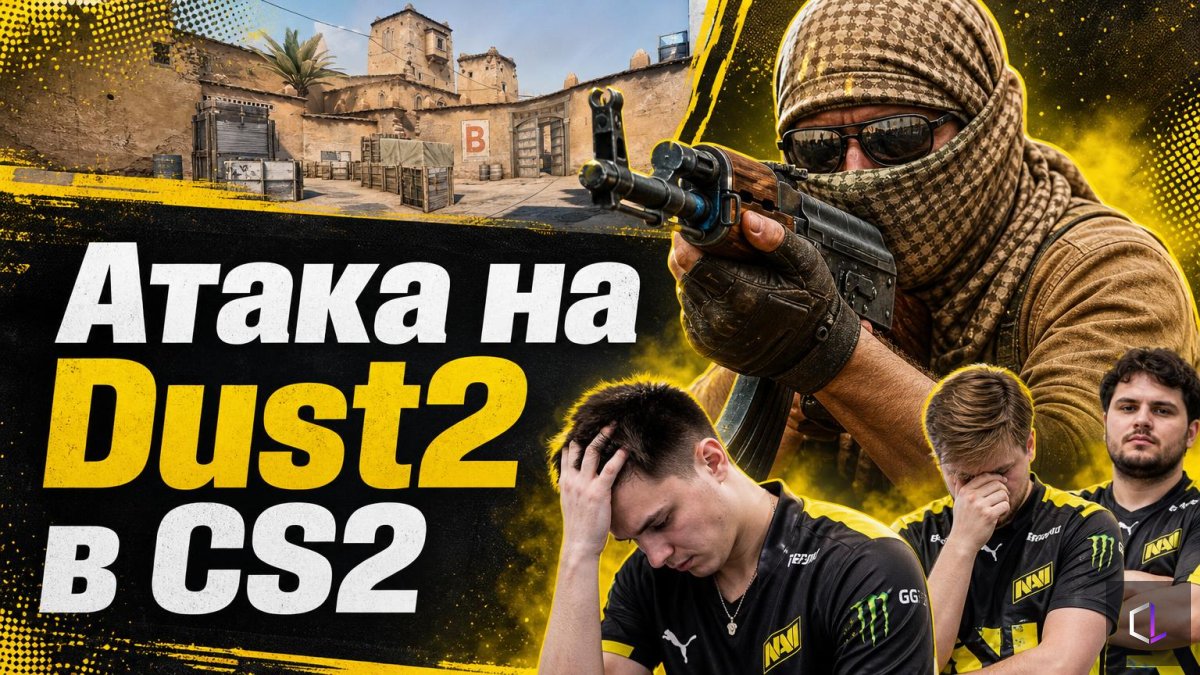
After the first map of the PGL Masters Bucharest 2026 grand final, the picture looked almost settled. Nemiga crushed FURIA and ended up two maps away from the title. For the Brazilians' sniper molodoy, that map was the worst of his career. Usually, after a start like that, the series turns into a formality: the losing side loses its tempo, and the opponent finishes the job.
FURIA chose a different scenario. On Dust2, which it took as its own pick, the team leveled the map score. Then the series returned to Nemiga: the next map was Cache, picked by the Belarusian roster.
A Pick as a Point of Support
The final is played in a Bo5 (best of five) format: whoever wins three maps first takes the series. Maps are chosen through a veto procedure. Teams take turns removing the maps they don't want to play, then choosing the ones they do, and the remaining map is the decider. Each side has its own picks, and the team that chose a map decides what gets played. The starting side (attack or defense) is chosen by the opponent.
That's why in a Bo5, after a crushing defeat, the most important thing is that the next map is your own. On its own map, a team knows its setups, grenade timings, and fallback plans in case the main one doesn't work. Here you can play from prepared material rather than from decisions made on the fly.
Dust2 suits this like few other maps. It is open, with clear routes, and clean, well-rehearsed actions work better on it than improvisation. A player who failed the day before gets tasks with a clear outcome: hold a specific angle, throw a specific grenade, make a specific call.
What a 1:1 Score Does
A rout on a map looks frightening, but in a Bo5 it counts as exactly one map. The round difference doesn't affect the win: whether it's 13:2 or 13:11, it's one point in the series. For the losing team, something else matters more psychologically. It has to stop treating the previous map as a verdict and start counting the series from zero, with two more maps to go before the title.
In situations like this, simple things usually work:
- Short calls. While the team is under stress, long breakdowns only inflate the problem. Formulas like "who, what, where" are enough.
- A return to the familiar. It's wiser to play the first rounds on your own map using the most rehearsed setups rather than looking for something new.
- A separate reset for the sniper. The player with the AWP most often shows the biggest gap between a good map and a bad one. His task on the next map is not to make up for what was lost, but to make the first simple peek and get the first clean frag.
A Mirror Storyline
The second map of the series looked like a mirror as it unfolded. According to descriptions of the match, its first half was played symmetrically, and games like that are usually decided by details: one won pistol round, one timeout taken at the right moment, one mistake in a clutch finish.
Now the same logic works against FURIA. Cache is Nemiga's pick, and the Belarusian roster will play where it has its most rehearsed foundation. The 1:1 series turns into a test of response: a team that has just come back from a rout itself faces the opponent's map, and Nemiga has a chance to move ahead again and regain the advantage it had after the first map.
For the viewer, this is a good demonstration of how a Bo5 works. The winner here isn't the team with the better average form, but the one whose system of picks and fallback plans lets it stay afloat in bad moments and make use of the good ones.