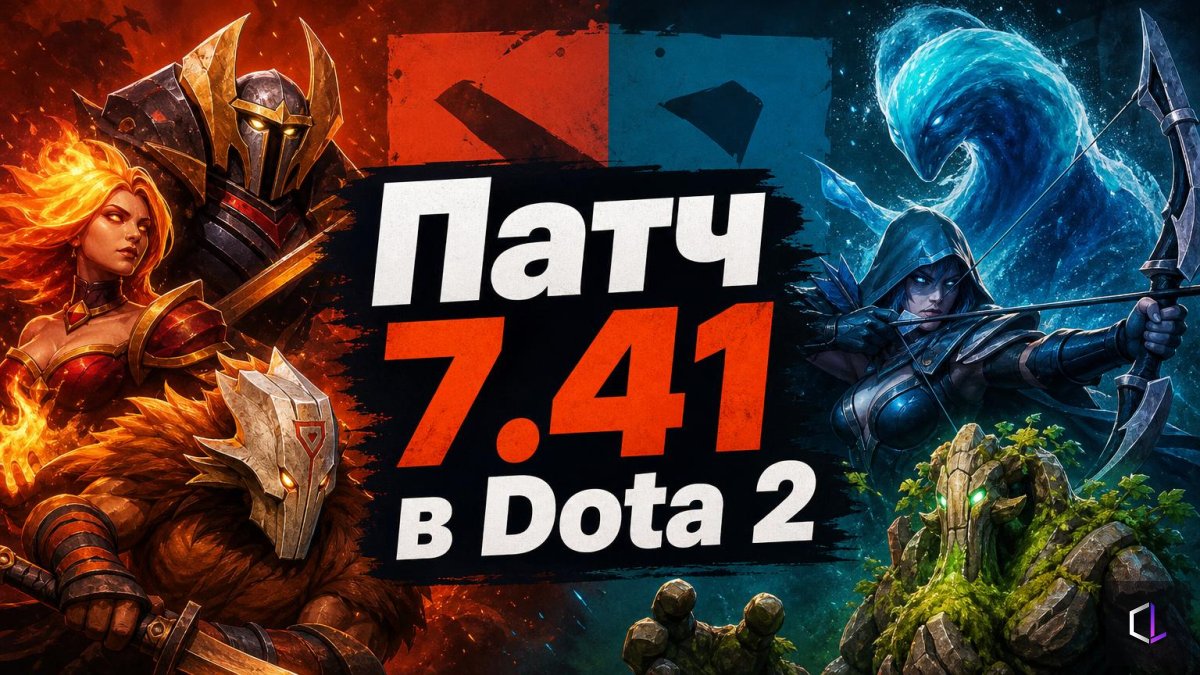
Patch 7.41 for Dota 2 came out a long time ago: 208 days have passed without an update. This is the second-longest pause between major patches. The previous "silver" belonged to the 7.39 and 7.40 pair, when players waited 207 days. The absolute record is still 33 days of downtime away. Pauses this long are a good occasion to compare two states of the meta: right after a patch's release and half a year later.
Two Stages of One Patch
In the first weeks after an update, nobody knows how to play correctly. Items have been recalculated, heroes have shifted, and familiar builds are either broken or, conversely, have become stronger. Win rates jump around, professional teams try strange picks, and pubs turn into a laboratory. The winner is whoever figures things out faster: the one with fewer dogmas in the draft and more willingness to test a hypothesis.
Seven months later, the picture is different. The best hero combinations have long been known, item timings are memorized, and for every popular strategy the opponent has a prepared answer. The meta hasn't disappeared, it has been "solved": the space of options hasn't expanded but has been worn down to a set of proven moves.
A Draft Where Everything Is Known
In a fresh meta, the draft is largely a lottery: it's unknown which hero will turn out to be overrated. In a frozen one, it becomes a chess game played according to long-studied opening theory. Teams know in advance what to pick in response to your pick and when to expect a blow to your tempo. A mistake in such a game costs more, because it can no longer be fixed with creativity: the opponent has a ready counterplan.
Hence the paradox. The longer a patch lives, the more it is execution that wins rather than a "clever" draft: steady farming, disciplined vision, precise decisions in fights. The advantage moves out of hero selection and into the small things.
Where to Find an Advantage in Ranked
The pub scene lags behind the pro scene, and in a frozen meta this works in your favor. Most players repeat popular picks, which means they are poorly prepared for unconventional ones. A rarely seen hero forces the opponent to improvise: they don't remember the necessary counter-items and don't know the timings of dangerous abilities. But this works only with deep knowledge of the hero itself. A "rare" pick without polished play is simply a weak pick.
Practical guidelines are as follows:
- keep a pool of three to five heroes and know all the build options for them, not just one favorite;
- review not only your losses but also your wins, where you let the opponent doubt their plan;
- check your item timings against replays: in a long meta, a gap of a couple of minutes between you and your opponent decides more than a draft idea;
- track counter-picks to the most frequent heroes in your bracket: they make up the real meta of the ranking.
The pause between patches also shows how much value there is in basic skills. A fresh patch forgives weak game reading: chaos covers the gaps. A frozen one does not forgive this. In it you can see who knows how to calculate the cost of a mistake, hold the tempo, and change the plan in time, and precisely