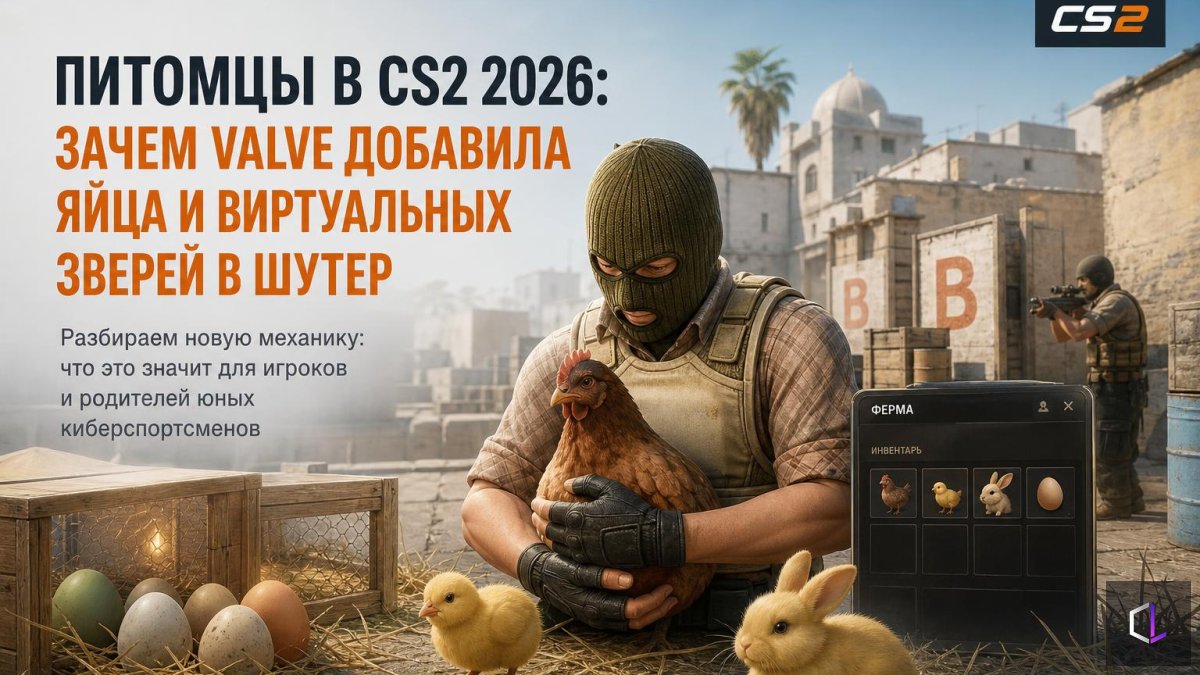
Pets in CS2 2025: why Valve added eggs and virtual animals to a shooter
Pets in CS2: an unexpected turn for a competitive shooter
CS2 has always positioned itself as a strict tactical game: round economy, map control, reaction time, and composure under pressure. That's why the news that eggs, hatching chicks, and an entire pet-raising system had been found in the game's files caused a mix of surprise and mild shock among the community. Many genuinely couldn't tell: was this a prank, or did the developers decide to follow the path of casual mobile games?
As it turns out — not a prank. The weekly drop really does include eggs of different patterns, accompanied by a "pet book" for photographing hatched animals, and the eggs themselves can potentially be sold once the pet has hatched. Essentially, this is a separate mini-economy within the game, a collecting mechanic that previously existed in CS2 only in the form of skins and stickers.
Why does a tactical shooter need a virtual farm
From a business standpoint, this is a logical move. CS2 isn't just a game — it's a massive trading platform: skins, cases, stickers, and now bomb stickers too. Pets fit into that same logic — they're a new layer of items that keeps players in the game longer and gives them an extra reason to open drops every week. For an audience that has been playing for years and has already built up a base inventory, it's a way to add a new goal without changing the gameplay itself.
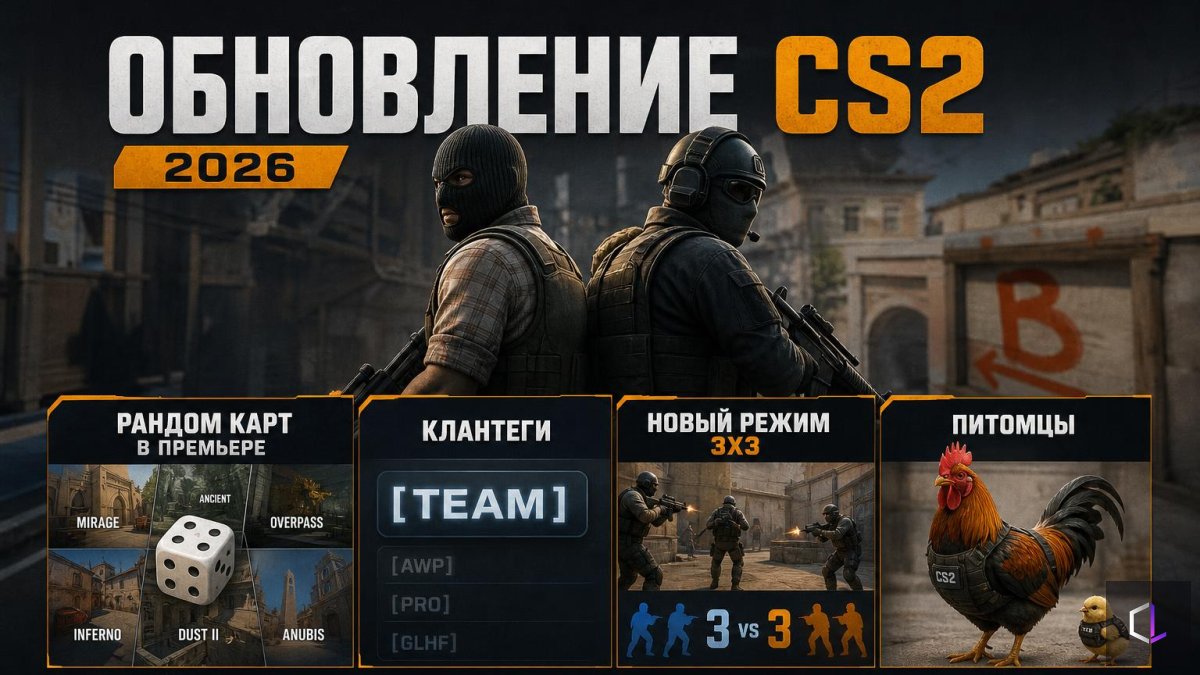
But there's another side to this. At the same time, an updated broken-shield icon was found in the game's files — a hint at the possible return of Danger Zone mode, a more casual and dynamic format compared to the classic 5-on-5. If you put this together with the pets and other non-competitive features, a trend emerges: Valve is clearly expanding the game beyond a purely tournament format, trying to retain a broader, mixed-age audience rather than just competitive players.
And what about the gameplay itself
More practical changes have come out in parallel. In Premier mode, the map-pick system has changed: teams no longer choose one specific map, but instead pick four from the pool, after which the game randomly determines which of them the match will be played on. The reason is understandable — some maps in the pool had been sitting unused for years, because the community stubbornly ignored everything except two or three favorites. Randomization should force players to train on the entire pool instead of drilling themselves on just one or two maps.
Another new feature is silent reloading. If you hold down the reload button, the weapon will reload significantly slower, but without the sound that gives away your position to the enemy. This adds a new tactical choice: take the risk and reload quickly with noise, or wait longer but stay undetected.
What this means for those who are learning to play seriously
For a young player aiming for real growth in CS2, it's important not to confuse entertainment content with what actually affects skill. Pets, bomb stickers, cosmetics — these are part of the game's ecosystem and a way for Valve to earn money and retain its audience, but they have nothing to do with the ability to read the map, manage round economy, or make decisions under pressure. The map-pick changes and the new reload mechanic, on the other hand, are things that genuinely need to be studied and practiced, because they change the approach to map drafting and positioning within a round.
The CS2 market isn't standing still, and the developers regularly test the boundaries between a tactical shooter and a games-as-a-service model with collectible elements. The player's task is not to get distracted by the noise surrounding flashy but non-essential features, and to focus instead on what actually decides the outcome of a match.