Who is the greatest player in CS2 history: why ropz switched from s1mple to ZywOo
Why people even argue about who's the best in CS2
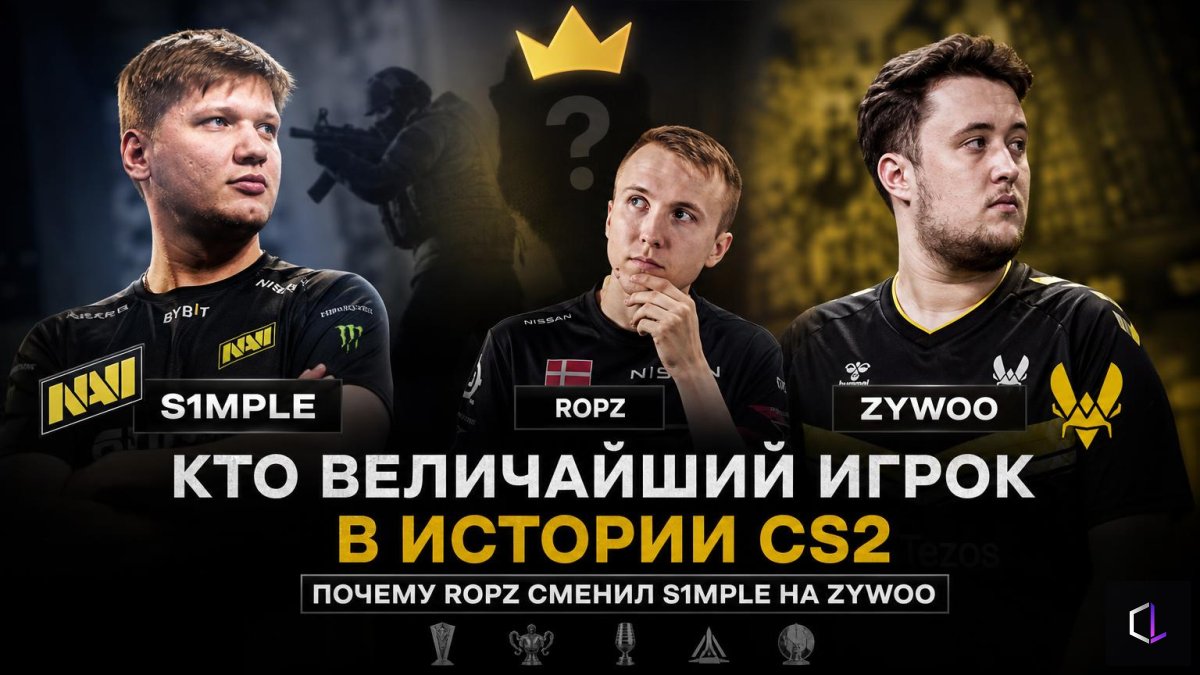
Conversations about the greatest player in Counter-Strike history come up regularly, but this time there's a concrete reason: one of the strongest players on the scene has publicly changed his opinion. A few years ago he called the Ukrainian s1mple the best, but now he gives first place to the Frenchman ZywOo, arguing that the latter didn't slow down over time and eventually surpassed his competitor in the number of MVP awards at tournaments.
To an outside viewer, this sounds like an ordinary chat argument. But if you dig into it, there's a fairly measurable story behind it — and it's interesting not only to fans of the top tier, but to anyone learning to play themselves.
What the numbers say
The difference in MVP awards is indeed noticeable — ZywOo has more than s1mple, and this isn't the result of a single tournament, but the outcome of several years of consistent performances. It's important to understand: a tournament MVP isn't awarded for one flashy clutch, but for the overall contribution to the team's wins throughout the entire event. This is a metric of consistency specifically, not a one-time show.
Looking at the statistics by year, it's noticeable that in different periods the scene was sometimes more "even" — when awards were distributed among twenty different players over a season — and sometimes more centralized, when there were noticeably fewer leaders. Such fluctuations are directly related to whether there's one clear dominator on the scene or whether competition is spread across rosters.
Why this isn't just a matter of taste
A change of opinion from a player of this caliber isn't a whim, but an acknowledgment of a fact: longevity at the top level is valued more than a bright peak in form. s1mple was a phenomenon of a certain era of CS:GO, while ZywOo went through the transition to CS2 and continued picking up trophies in the new game. These are different challenges, and the ability to adapt to a change in engine, tick rate, grenade mechanics, and other changes is a separate skill that's rarely discussed but that truly distinguishes a long career from a bright flash.
What a beginning player can take from this
Three concrete conclusions that are useful for anyone learning to play at a serious level:
- Peak form is not the same as greatness. You can play one tournament phenomenally and then disappear, or you can show an average but stable high level for years — the latter is valued more highly in the long run.
- Adaptation matters more than habit. Players who rebuilt their game for CS2, rather than trying to play "like in CS:GO," ended up being more successful.
- Statistics are useful, but not absolute. MVP reflects the contribution in specific tournaments, not the fact that a player is objectively "better" than another — it's always about context: team roster, strength of opponents, the season's metagame.
The argument about the greatest will never be fully settled — and that's the whole point of it. But behind the emotional part of the argument lies a perfectly workable idea: progress in esports is measured not by one bright moment, but by the ability to maintain a level for years and change along with the game.