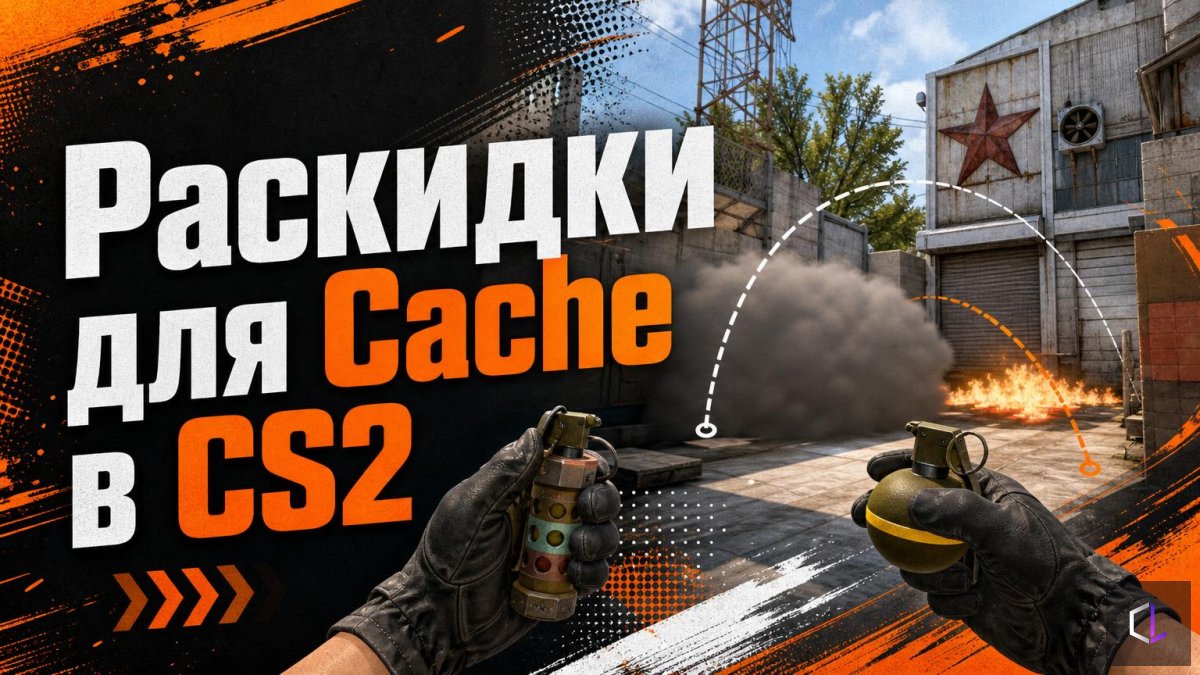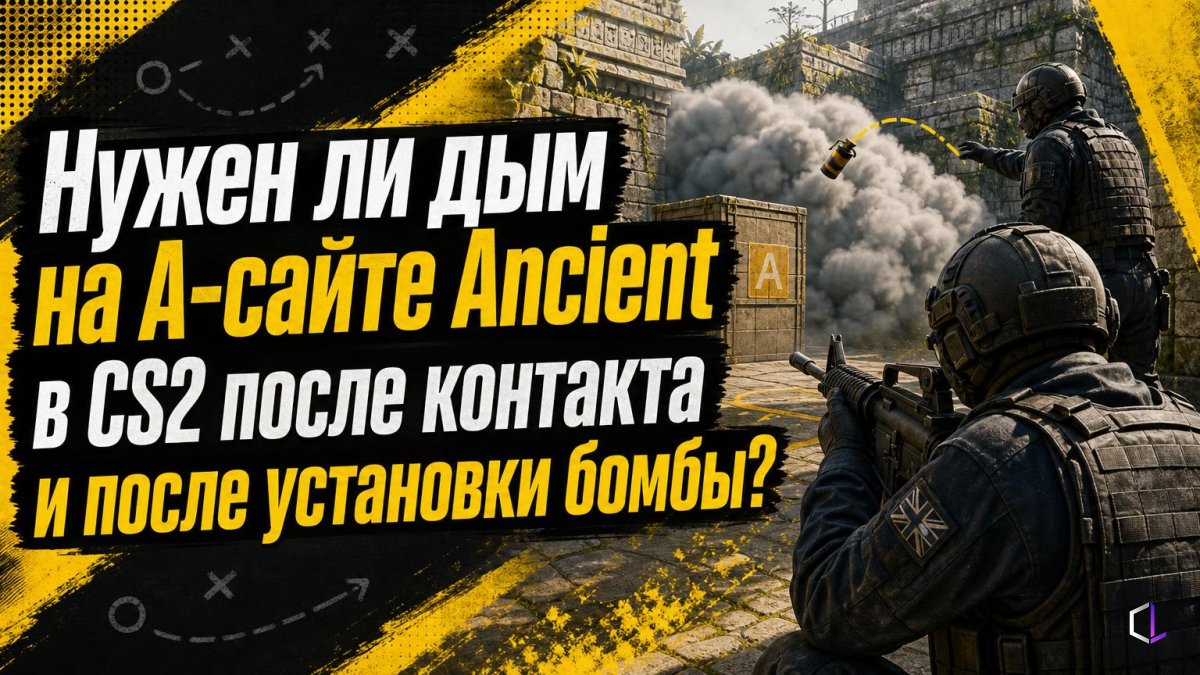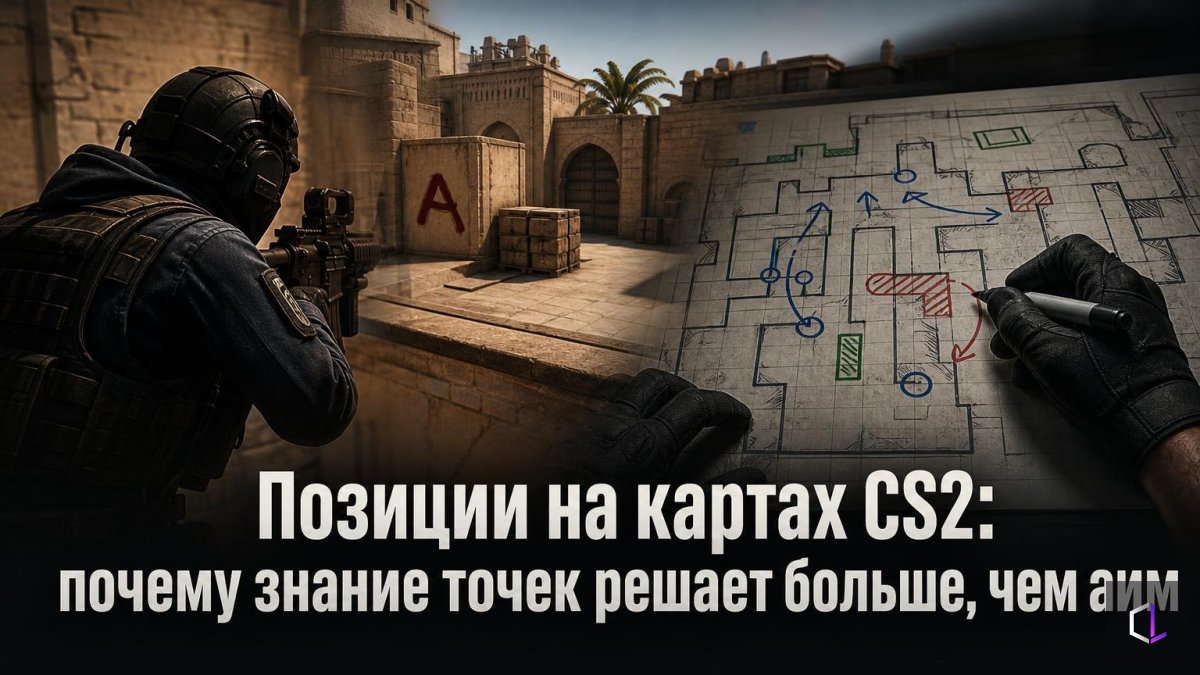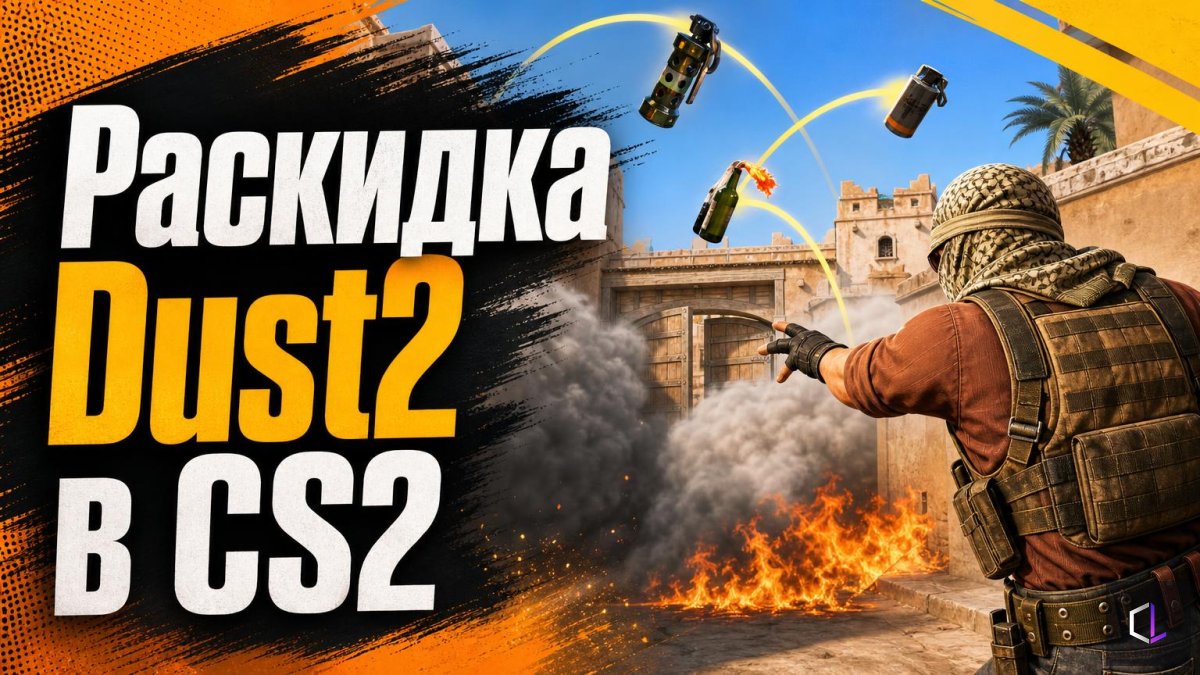
An execute with smokes on the entry looks simple: two or three grenades, and the team walks onto the site. In practice, half of the failures happen not when the smokes are thrown, but in the following five seconds, when you need to follow up with molotovs and flashes. The smokes have already blocked vision, the resources are spent, and the site is not yet taken. This is the stretch that, judging by community discussions, raises the most questions on Dust2, and it deserves a systematic breakdown.
Why smokes are only the first layer
A smoke in CS2 is a wall that blocks the line of sight for 18 seconds. It doesn't kill or push out defenders: it only deprives them of the ability to shoot through a specific passage. Everything that happens behind this wall remains unknown both to you and to the defense. That is why the next grenades solve a different task: forcing defenders out of the positions where they are ready to meet the entry.
A molotov (an incendiary grenade that creates a zone of fire for several seconds) works as a tool for pushing players out: a player won't stand in fire, so he either retreats or takes damage. A flash (a blinding grenade) works as a tool for creating a window: it gives two to three seconds in which the entry is safe for the attackers. These two grenades can't be thrown in arbitrary order, and here is why.
Order matters more than accuracy
A typical mistake is throwing everything at once "to be faster." Then the molotov and the flash compete for the same time. The fire forces the defender off his position, and that is exactly the moment when the blinding grenade is needed, but it has already worn off while he was running.
A logical sequence looks like this:
- first, a molotov onto the position where the defender sits the longest and where he can't be reached with bullets because of cover;
- then, once the fire is already burning and the defender has shifted, a flash onto the spot where he is most likely to retreat;
- only after that do the players themselves enter, and the first one in goes after the flash, not at the same time as it.
The interval between grenades isn't a matter of feel. It can and should be counted in seconds and trained to automatism, like the executes on any other map.
The CyberLab view: the timeline matters more than the lineup
The community loves to collect lineups, that is, memorized aiming points for grenades. We think this is a distortion. A lineup is a necessary but secondary skill: any player can learn ten points in an evening. Far more rarely does a team have a person who knows when exactly to use a given point.
The argument is simple. A lineup doesn't change, but the defense changes every round. If the defenders put a player in a non-standard position, the memorized combination hits empty space, and the team is left without grenades at the most important spot. An execute with a flexible order will survive such a change: it is enough to be able to swap the molotov and the flash, or replace one of them, without breaking the rest.
So what should come first is not a set of points but a rule: which grenade is responsible for which task, and what to do if the task has already been solved by someone other than you. This position is open to dispute: many believe that amateurs have no time for flexibility and a rigid scheme is more reliable. For us this is a dead end. A rigid scheme works exactly until the first round in which the opponent has read it.
What breaks in real matches
Three failures occur more often than the rest.
A late molotov. The player waits for the smokes to "settle," although the fire can be thrown almost immediately. Because of the pause, the defenders have time to reposition.
A blind flash. The throw is made "toward the site" with no link to where the defenders are standing right now. The result: your own players are blinded and the defense is intact.
No signal to go. The grenades are thrown, but nobody said when to enter. The team stands at the smoke while the fire burns out, and the window closes.
All three problems are cured the same way: map the execute out by the second and agree on who gives the signal. Not "going in," but a specific word or number that all five react to.
How to build your own combination
Take one position on the map and work through it in isolation. First practice the smokes, then add the molotov, then the flash, and only when each layer repeats consistently, combine them. Record how many seconds pass between the grenades and stick to those numbers. Then change the initial condition: let the defender stand differently, and see what in the combination remains workable and what needs to be rebuilt.
An execute that can be rebuilt on the fly is worth more than an execute that can only be repeated. This is the distinction that team play against strong opponents rests on: where a memorized scheme runs into the opponent's read, the winner is the one who understands why each grenade in it is there.