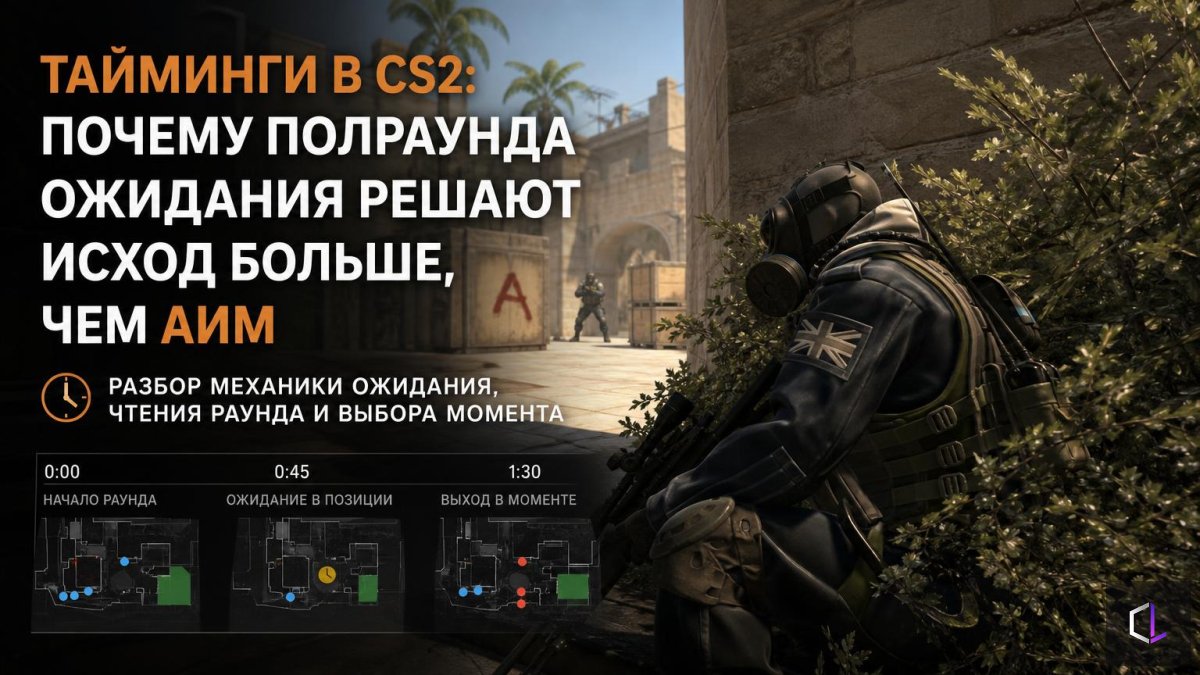
Timings in CS2: why half a round of waiting decides the outcome more than aim
When a pause matters more than a shot
In highlight compilations from recent matches, one moment stood out: a player sat in ambush on Anubis for almost half the round, doing nothing — and the moment he finally stood up, the opponents were running right into him. From the outside, this looks like luck or a nice boost. In reality, it's a vivid illustration of what's commonly called timings in CS2 — and this particular skill often separates a player with good aim from a player who actually wins rounds.
What timing really is
Timing isn't literally about a stopwatch. It's about a feel for the opposing team's rhythm: when they usually go for the default setup, when they start a rush, how much time the opponent needs to get from spawn to a key point on the map. The player who "hung" on a position for half the round was actually reading sounds, the opponent's tempo, and information from the minimap — and waiting not at random, but deliberately.
The difference between a beginner and an experienced player here is huge:
- a beginner either peeks too early and gets caught in someone else's crosshair first;
- or peeks too late and loses control of the position;
- an experienced player adjusts their peek to the opponent's natural timing — and gains an advantage almost for free.
Why this is harder than it looks
The problem with timings is that you can't learn them once and forget about it. Every map, every position, every skill level of the opponent changes the rhythm of the round. At one rank, default setups are slow and predictable; at another, opponents pressure with aggression from the first second. A player who relies only on reflexes and reaction sooner or later hits a ceiling precisely because of this: they physically shoot fast but don't understand when and where they should be looking.
It's also worth mentioning examples of outright failed timings and decisions in a round — when a player peeks into an unfavorable position, loses a one-versus-five trade, and essentially throws the round for the team single-handedly. Such episodes are also useful to analyze: they show that even strong mechanics won't save you if the decision is made at the wrong time.
What to do about it in practice
Timings are built through repetition and analysis, not through intuition that appears on its own. Useful habits:
1. Watch replays of your own rounds and note the moment you peek a position relative to sounds and information from the team.
2. Calculate approximate time to key points on the map — how long the opponent needs to run from point A to point B.
3. Analyze other people's demos at the top level not to copy a boost, but to understand the logic: why the player waited exactly that long.
A separate nuance — game updates and client settings also affect how timing is perceived: changes in footstep sounds, animation speed, or network parameters after patches can shift familiar feelings even for experienced players, and this is worth keeping in mind if your "favorite" position suddenly stops working.
Timings are that rare skill in CS2 that matters equally at low ranks and on the professional scene. It's only up there, at the top, that the difference between "peeking half a second earlier" and "peeking half a second later" costs an entire tournament round.


