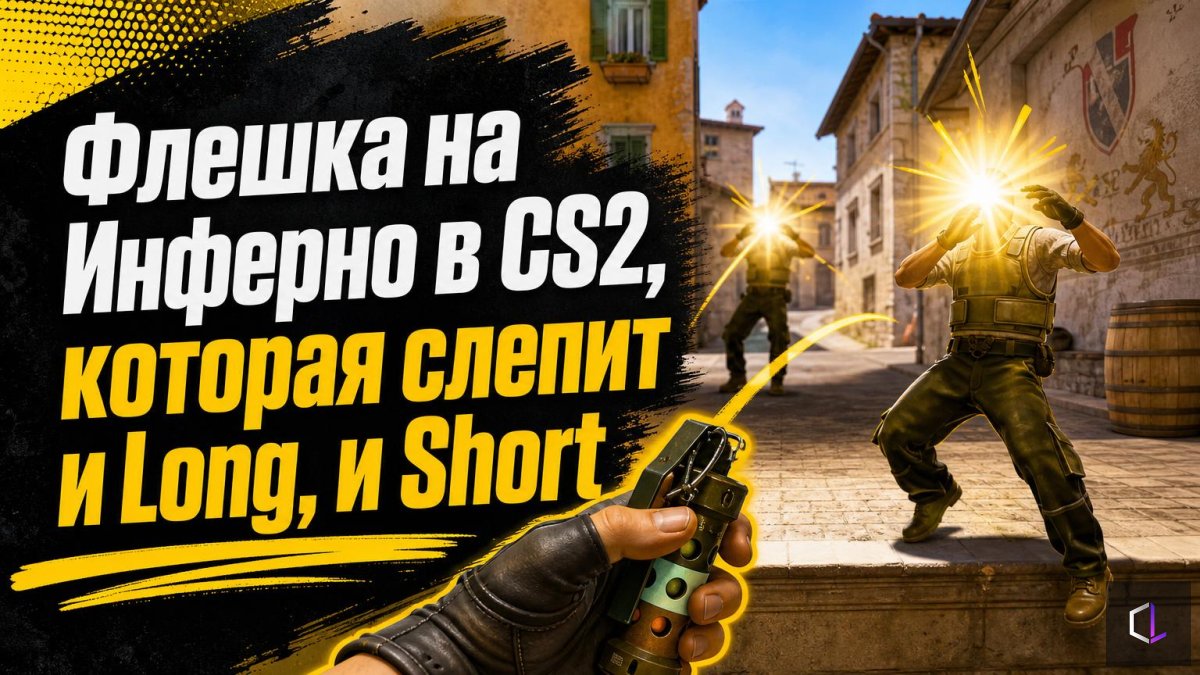
Most players confidently throw three or four grenades on a map and mix up the rest from memory. The smoke lands a meter to the left, the flash pops off a wall, the molotov doesn't reach the right spot. The cause is usually not aim, but that lineups are learned in scraps: you watched a video, repeated it a couple of times and forgot.
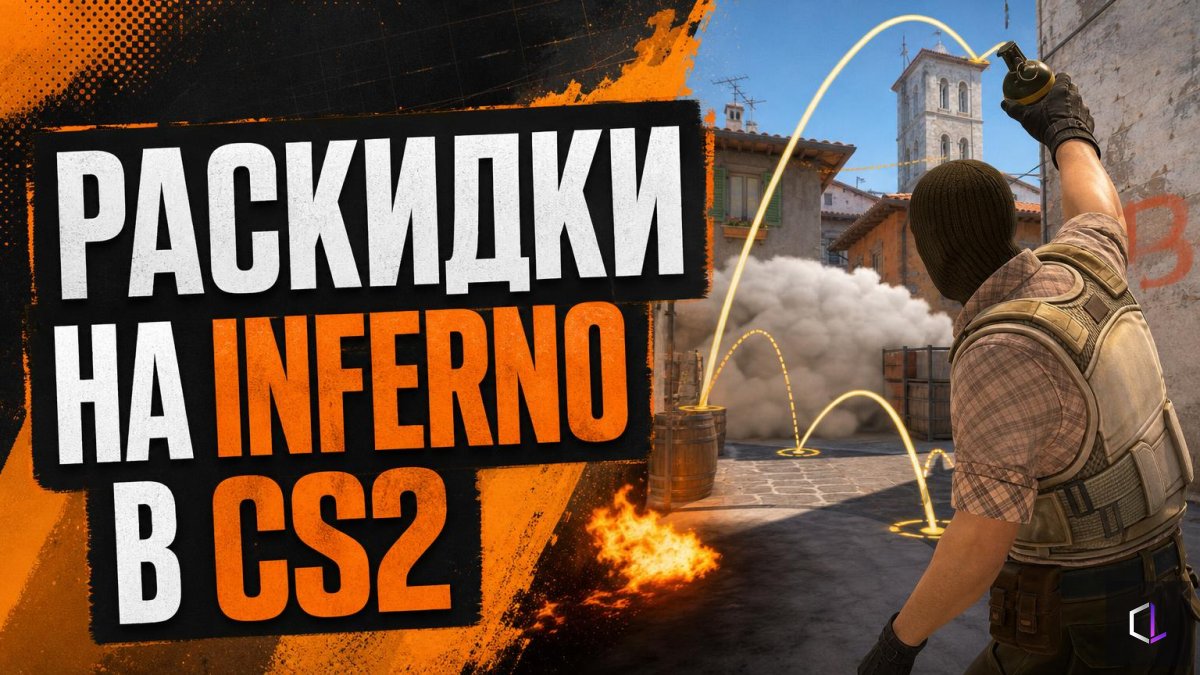
A practice map with 98 lineups has appeared for Inferno: smokes, flashes and molotovs. A lineup is a grenade throw from a strictly defined spot with a specific reference point on the screen. Every map has dozens of them, and a library of them on its own gives you nothing. What matters is the order and the intervals at which you work through it.
Five modes, five different tasks
The map has several built-in modes, and each covers its own stage of learning:
- hints show where to stand and where to aim;
- throw analysis rates accuracy and points out mistakes;
- Random Challenge gives out random tasks;
- Exam tests the skill;
- Speedrun trains speed.
This is an almost ready-made learning scheme: first show, then correct, then test without hints, then speed up. If you go through the modes in a different order, for example by sitting down at Speedrun right away, only mistakes will get locked in.
How to go through the map step by step
1. Don't take all 98 at once. Pick one task, for example one attack exit or one defensive position, and put together 5–8 grenades for it. It is easier for the brain to remember a coherent set of "smoke, flash, molotov for one execute" than a scattered list.
2. Start with hints. Go through the chosen throws with the position and reference point shown. The goal of this stage is not to hit the target but to see what a correct throw looks like: where the feet stand, where the crosshair points, how the grenade has to be thrown, with a jump or without.
3. Turn on throw analysis and read the nature of your mistakes. If grenades consistently go to one side, you are standing in the wrong spot or your reference point is shifted. If the spread is chaotic, the throw itself is unstable. This is especially common in jump lineups, where the mistake is usually in the moment of releasing the grenade. Each of the two problems is fixed in its own way.
4. Remove the hints and switch on Random Challenge. Random order matters: in a match nobody will offer you "the next lineup on the list." You have to recognize the situation yourself and pull out the right grenade.
5. Take the Exam not every day. A check once every few days shows what has really stayed in memory and what was held only by fresh repetition. Record the result and next time add to your set what you failed.
6. Leave Speedrun for the end. Speed only makes sense on top of stable accuracy. In a match you need to pull out and throw the grenade within the time you actually have before the team exits, but a fast inaccurate smoke screen is worse than a slow accurate one.
7. Go beyond the practice map. Jump into a regular game with a partner and throw the memorized set as a combo: the smoke blocks vision, the flash goes before the exit. A throw learned alone on an empty map and a throw under the pressure of the round timer feel different, and the gap is closed only by playing.
Why you need to space out repetition
Lineups are forgotten faster than it seems: while a throw has been made ten times in a row it seems learned, but after two or three days only the most frequent ones remain. That is why short sessions on different days are better than one long evening. Begin each new session by checking the throws you've already covered and only then add new ones. This is how a library of 98 grenades turns into a working toolkit that doesn't fall apart after the first break in training.