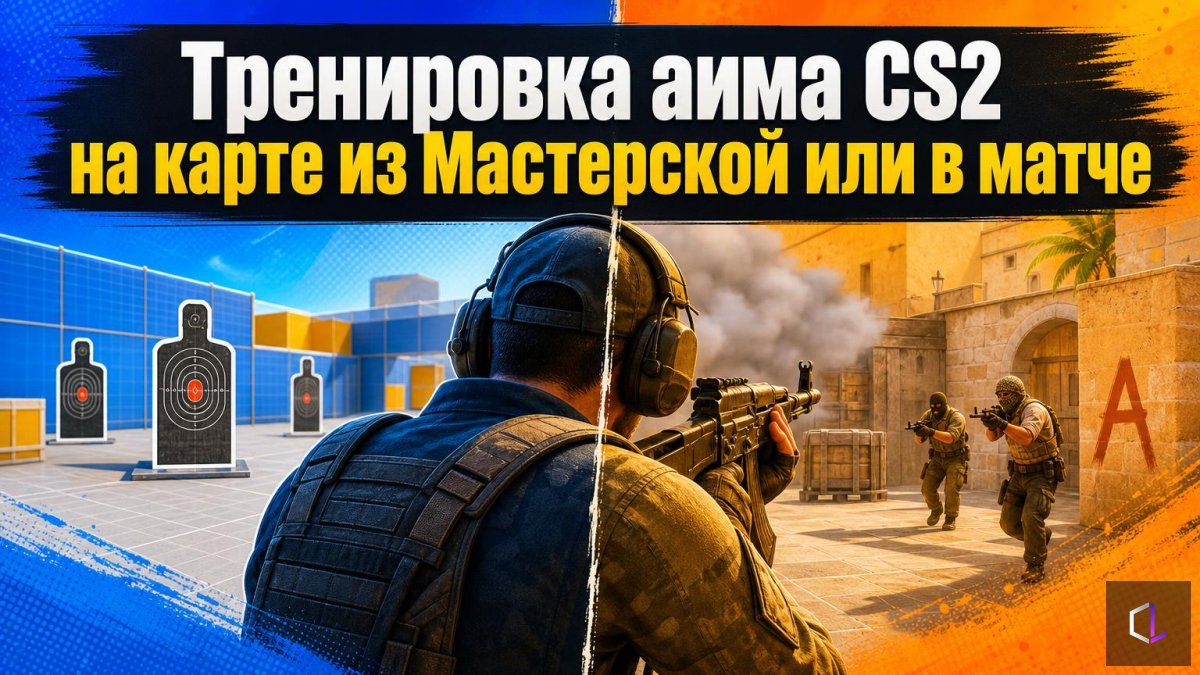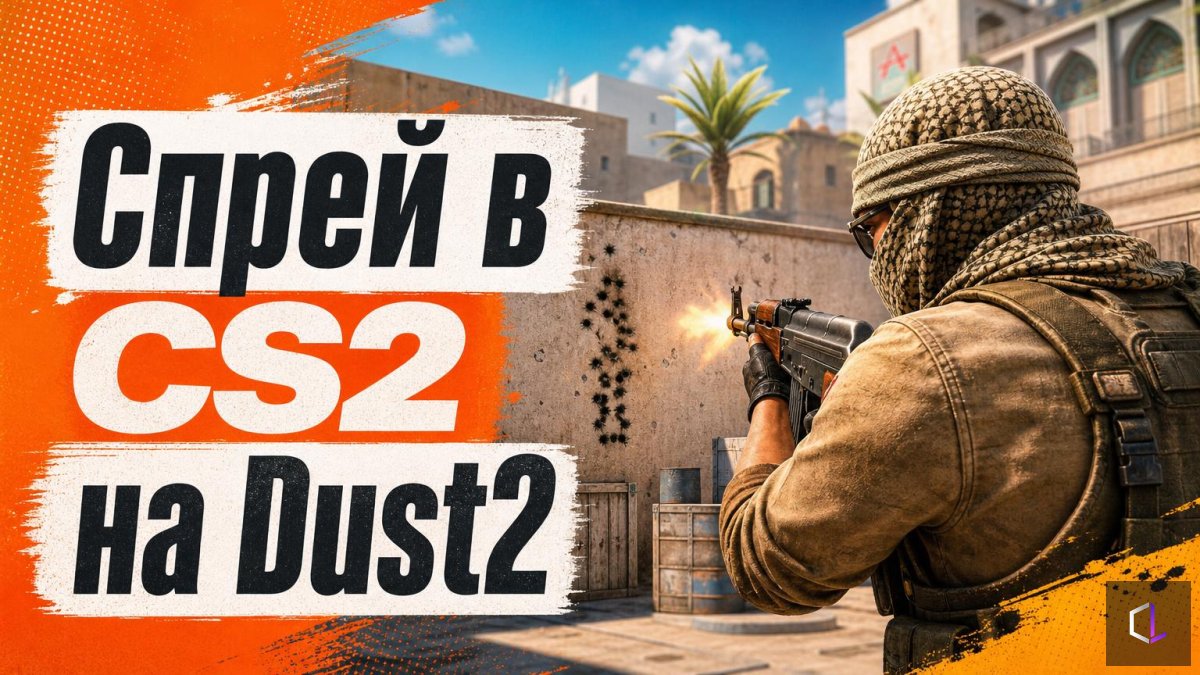
A custom map called Spray Lab - Dust 2 has appeared in the CS2 Workshop: it lets you practice spray control, that is, holding the fire button while compensating for recoil, in different situations on a familiar map. It's a good reason to rethink how spray practice works in general, because most players do it wrong: they shoot at a wall for an hour, and in a match they still miss on the third bullet.
Why spraying at an empty wall gives you almost nothing
The recoil pattern of every weapon in CS2 is fixed: if you hold the button and don't move the mouse, the bullets will land along the same trajectory every time. That's why shooting at a wall teaches you only one thing — memorizing the pattern. But a real duel requires something else: hitting a moving target while also dosing the length of your burst, adjusting to the distance, and not losing your aim when you change position. A map with the recognizable angles of Dust2 is closer to real conditions: you have familiar spots, distances, and a background against which you have to find the target.
How to structure your practice: a step-by-step plan
1. Warm up your hand without shooting. Spend a minute or two simply aiming at heads and returning to a neutral point. This switches on your muscle memory before you start reinforcing recoil control.
2. Start with one weapon. Pick the one you play most often and don't switch it for the whole session. Changing weapons mid-drill blurs your memory of the recoil pattern.
3. Short bursts first. Practice bursts of a few bullets with a pause: press, release, let the crosshair settle back, press again. This is the rhythm you most often need at medium range, where a long spray climbs into the ceiling.
4. Then long sprays at close range. Here the task is to pull the mouse down just enough to cancel the crosshair's rise, without overcorrecting.
5. Vary the situations within the map. Practice the same spray from different positions and at different angles to the target, so the habit doesn't get tied to a single spot.
6. Finish with a test in live conditions. A couple of short matches against bots, or a warmup in a mode with live targets, will show whether the skill has carried over beyond the drill.
Common mistakes when handling recoil
Pulling the mouse sharply and hard. Compensation should be smooth: a jerk downward throws the crosshair below the target just as it would have thrown it upward without compensation.
Firing long bursts out of habit. Spraying is not the default mode. At long range, a short burst or single shots are more accurate; a long spray is justified up close, where the target is large and the time to kill is shorter.
Ignoring sensitivity and resolution. If your sens is too high, it's physically hard to perform smooth compensation: a tiny wrist movement produces too large a shift. Before practicing, make sure your mouse settings and sensitivity are comfortable for you, and don't change them in the middle of a series of drills.
How much and how often to practice
Spraying is a skill that is better reinforced through short, regular sessions than through one long one. A practical format is a separate block in your pre-game warmup, not a replacement for your entire training. Fatigue in your hand and eyes quickly blurs accuracy, so once you start clearly missing in situations you already know, it makes more sense to stop than to keep grinding the drill.
Maps like Spray Lab won't replace playing against humans, but they give you a controlled environment: you can see exactly where your aim drifts, and you can repeat the same thing as many times as it takes for the habit to become automatic. Choose one "weapon plus distance" pairing per session, bring it to a stable result, and only then add the next one — that way progress accumulates instead of falling apart.